There’s a particular kind of magic that happens when a cast-iron skillet meets cornmeal batter and a screaming-hot oven. The edges turn deep golden and almost crackly, while the inside stays soft, moist, and just sweet enough. If you’ve ever bitten into a slice of cornbread that was either too dry or too cakey, this guide is about to change your life in the kitchen.
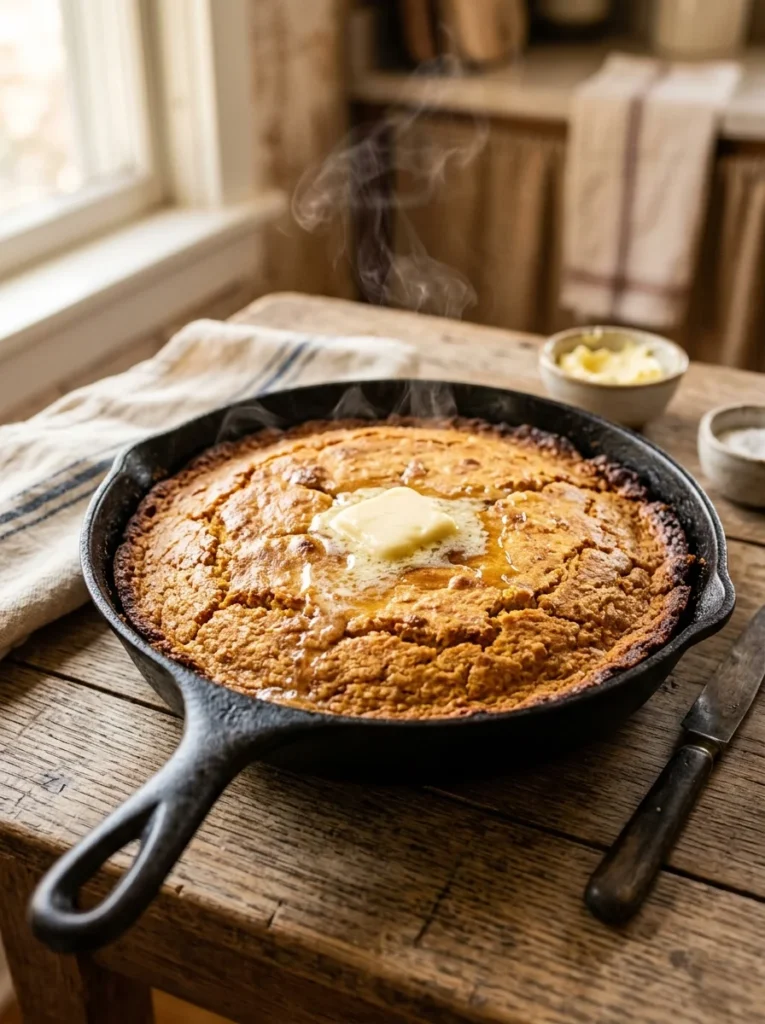
Getting that perfect contrast between crunchy crust and tender crumb isn’t complicated, but it does come down to a few key techniques most recipes skip over. Let’s break down exactly how to get bakery-level cornbread right at home.
Why Cast Iron Makes All the Difference
A regular baking pan just can’t compete with cast iron when it comes to crispy edges. Cast iron holds and distributes heat differently, which is the whole secret behind that deep golden crust.
- It heats evenly and stays hot, so the batter starts cooking the moment it hits the pan.
- Preheating the skillet in the oven before adding batter creates an instant sizzle around the edges.
- A well-seasoned skillet naturally releases the cornbread without sticking.
If you don’t own cast iron, a heavy metal pan works in a pinch, but the crust won’t be quite as dramatic.
Gather the Right Ingredients
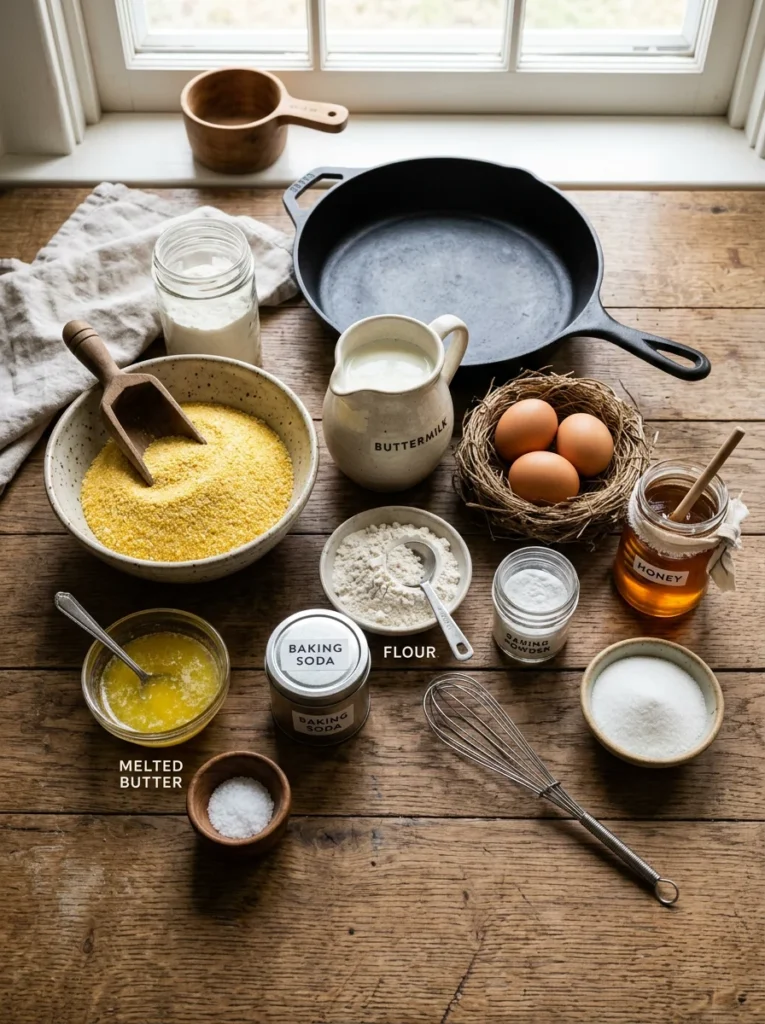
Good cornbread starts with a handful of simple ingredients, but the ratios matter more than people think.
- 1 cup yellow cornmeal
- 1 cup all-purpose flour
- 1 tablespoon baking powder
- 1/2 teaspoon baking soda
- 1 teaspoon salt
- 2 large eggs
- 1 cup buttermilk
- 1/4 cup melted butter, plus extra for the skillet
- 2 tablespoons honey (optional, for a touch of sweetness)
Buttermilk is non-negotiable here. The acidity reacts with the baking soda to create lift, and it adds a subtle tang that balances the sweetness.
The Preheating Trick Nobody Talks About
This is the step that separates good cornbread from great cornbread. Before you even mix your batter, place your empty cast-iron skillet in the oven while it preheats to 425°F.
Letting the skillet heat up for at least 10 minutes does two things:
- It gets hot enough to instantly sear the batter on contact.
- It melts the butter you add right before pouring, creating a sizzling, almost-fried crust around the edges.
When you’re ready to bake, carefully pull out the hot skillet, drop in a tablespoon or two of butter, and swirl it around so it coats the bottom and sides completely.
Mixing the Batter Without Overdoing It
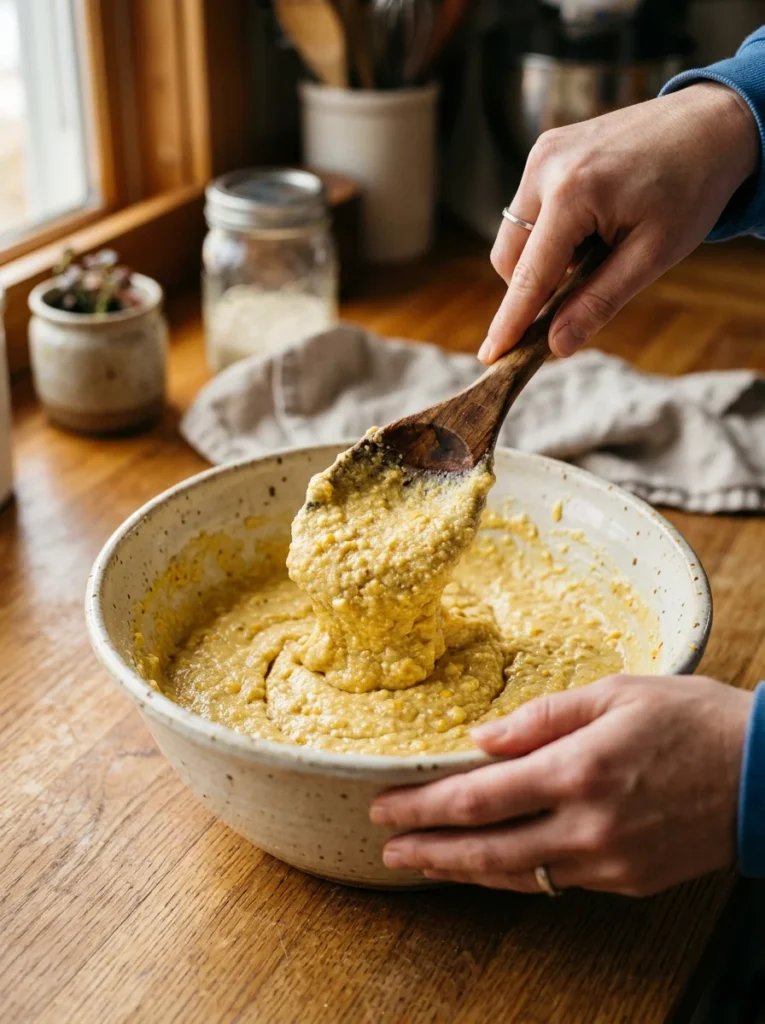
Overmixing is the number one reason cornbread turns out tough instead of tender. Cornbread batter wants a gentle hand.
- Whisk your dry ingredients together first: cornmeal, flour, baking powder, baking soda, and salt.
- In a separate bowl, beat the eggs, then stir in the buttermilk, melted butter, and honey.
- Pour the wet ingredients into the dry ingredients and stir just until combined. A few lumps are completely fine.
Stop mixing as soon as you don’t see streaks of flour. The more you stir, the more gluten develops, and that’s what leads to a dense, chewy texture instead of a soft, tender crumb.
Pouring and Baking for Maximum Crisp
Once your batter is ready, work quickly so the skillet stays as hot as possible.
- Pour the batter directly into the preheated, buttered skillet. You should hear a faint sizzle around the edges.
- Smooth the top gently with a spatula, but don’t overwork it.
- Return the skillet to the oven and bake at 425°F for 20 to 22 minutes.
- Check for doneness with a toothpick inserted in the center; it should come out clean with no wet batter clinging to it.
Resist the urge to peek too often. Opening the oven door repeatedly lets heat escape and can affect how evenly the cornbread rises.
Letting It Rest (Yes, This Matters)
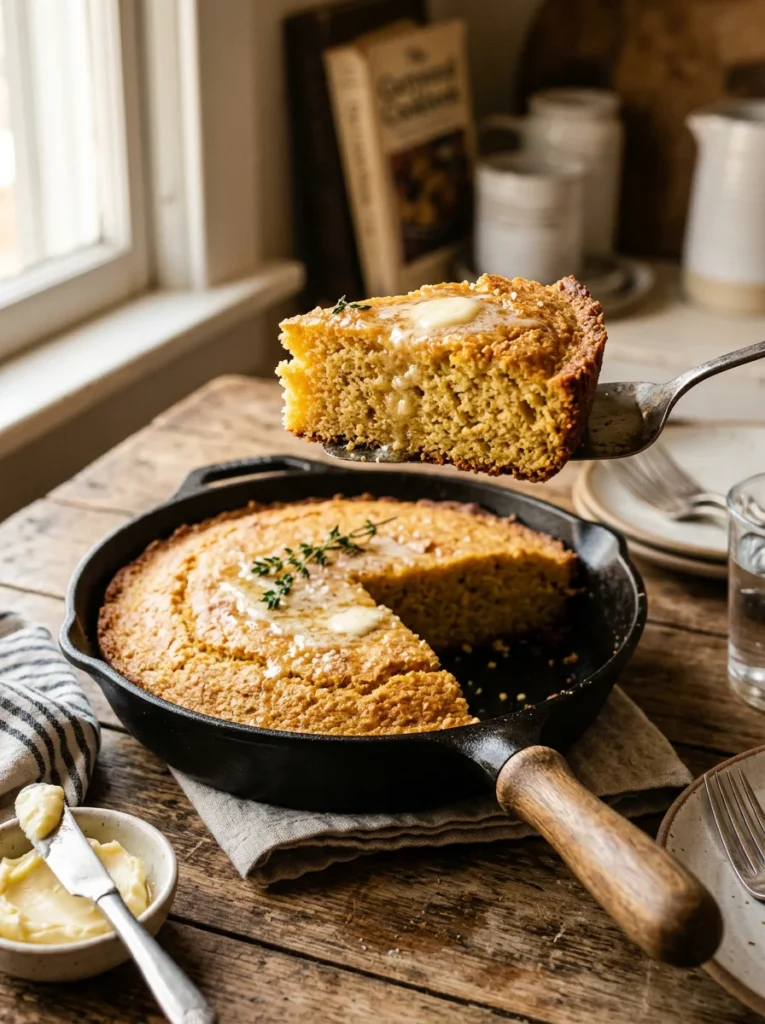
Pulling the cornbread straight from the oven and slicing it immediately is tempting, but a short rest makes a real difference.
- Let the skillet sit for 5 minutes before cutting.
- This allows the crumb to set, so slices hold together instead of crumbling apart.
- The crust also stays crisp longer if you let steam escape gradually instead of trapping it under a cutting board right away.
Quick Tips for Foolproof Results Every Time
A few small habits make this recipe nearly impossible to mess up:
- Always use room-temperature eggs and buttermilk so the batter mixes smoothly.
- Don’t skip the resting step in the skillet before mixing wet and dry ingredients separately.
- For extra-crispy edges, add a touch more butter to the skillet than you think you need.
- Store leftovers wrapped tightly, and reheat slices in a skillet rather than the microwave to bring back the crunch.
Save This Recipe for Later!
Crispy edges and a tender, moist center aren’t too good to be true. They just take the right pan, the right temperature, and a little patience while it rests. Pin this guide, screenshot it, or save it to your recipe folder so it’s ready the next time you’re craving a warm slice of homemade Southern cornbread. Once you try this method, it might just become your only method.
Leave a Reply