Store-bought salad dressing is convenient… but it’s often packed with preservatives, extra sugar, and ingredients you can’t even pronounce.
The good news? You can make a fresh, flavorful salad dressing in less time than it takes to open a bottle.
Once you learn a simple formula, you’ll never need a recipe again. Just mix, shake, and pour.
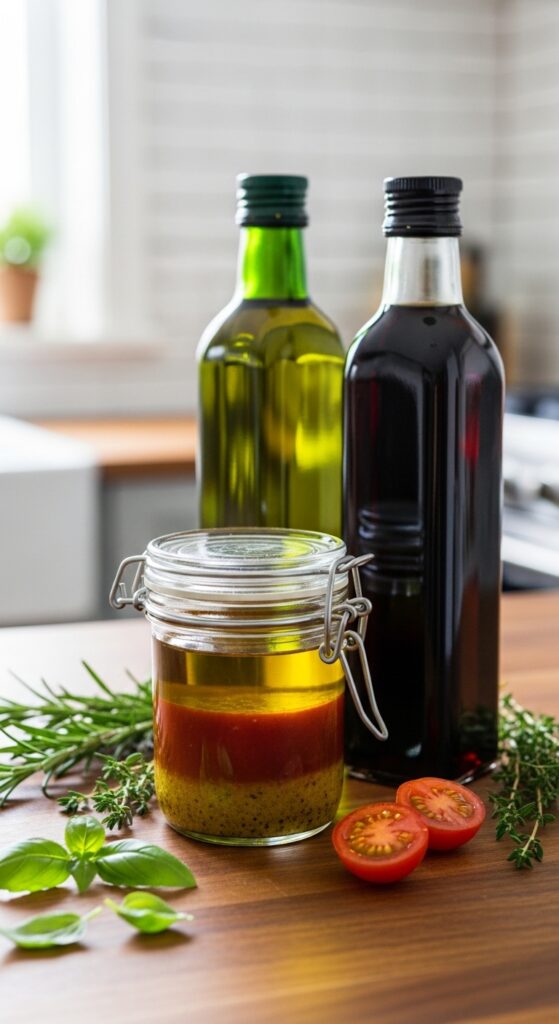
Let’s break it down into the easiest method possible.
The Basic Formula (Memorize This)
Every classic vinaigrette follows this ratio:
3 parts oil : 1 part acid
That’s it.
For example:
- 3 tablespoons olive oil
- 1 tablespoon vinegar or lemon juice
This balance gives you:
- Smooth texture
- Bright flavor
- No harsh acidity
Once you understand this base, you can customize endlessly.
Step 1: Choose Your Oil
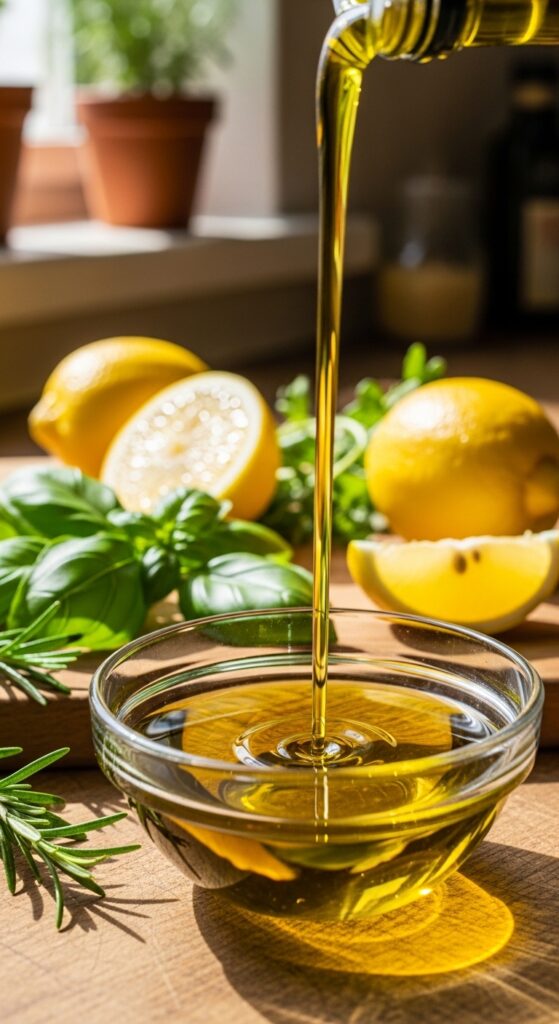
Oil makes up most of the dressing, so choose one you actually enjoy.
Popular options:
- Extra virgin olive oil (rich and classic)
- Avocado oil (neutral and smooth)
- Grapeseed oil (light and mild)
- Light olive oil (less intense flavor)
For most salads, olive oil is perfect.
Step 2: Pick Your Acid
This is what gives your dressing brightness.
Common choices:
- Red wine vinegar
- White wine vinegar
- Apple cider vinegar
- Balsamic vinegar
- Fresh lemon juice
- Fresh lime juice
Want something light and fresh? Use lemon.
Want depth and sweetness? Use balsamic.
Step 3: Add Flavor Boosters
This is where the magic happens.
Start simple:
- ½ teaspoon Dijon mustard
- Pinch of salt
- Freshly ground black pepper
Then customize:
- Minced garlic
- Honey or maple syrup
- Fresh herbs (parsley, basil, dill)
- A pinch of chili flakes
Mustard is especially helpful — it acts as an emulsifier, helping the oil and vinegar stay blended longer.
Step 4: Whisk or Shake
You have two easy options:
Option 1: Whisk in a Bowl
Slowly drizzle oil into the acid while whisking continuously.
Option 2: Shake in a Jar (Easiest Method)
Add everything into a small jar with a lid and shake vigorously for 15–20 seconds.
The jar method is perfect for beginners and cleanup is minimal.
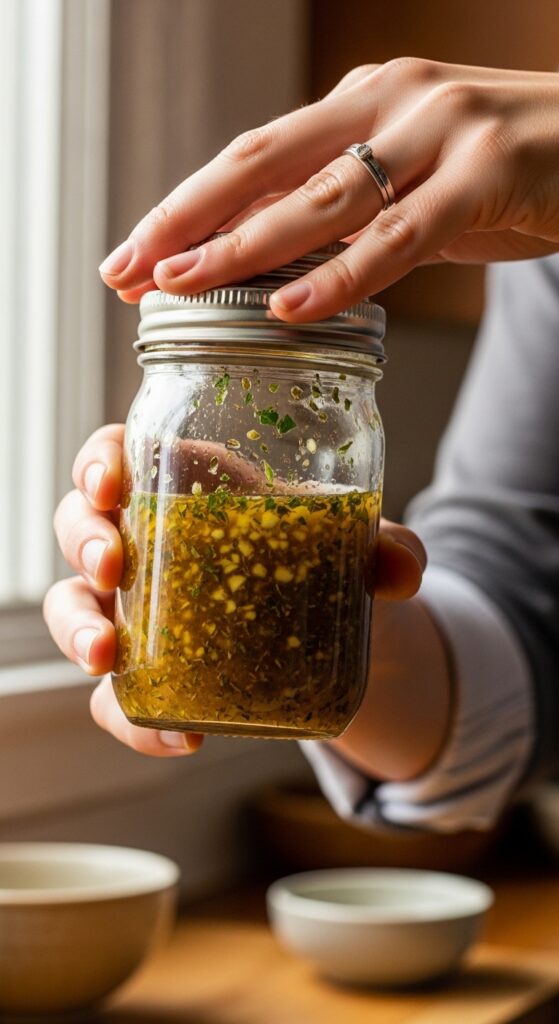
When it looks slightly creamy and combined, it’s ready.
Step 5: Taste and Adjust
This step takes your dressing from “good” to “perfect.”
Dip a lettuce leaf into the dressing and taste.
Ask yourself:
- Too sharp? Add a little more oil or a tiny drizzle of honey.
- Too bland? Add a pinch of salt.
- Too flat? Add more acid.
Small adjustments make a big difference.
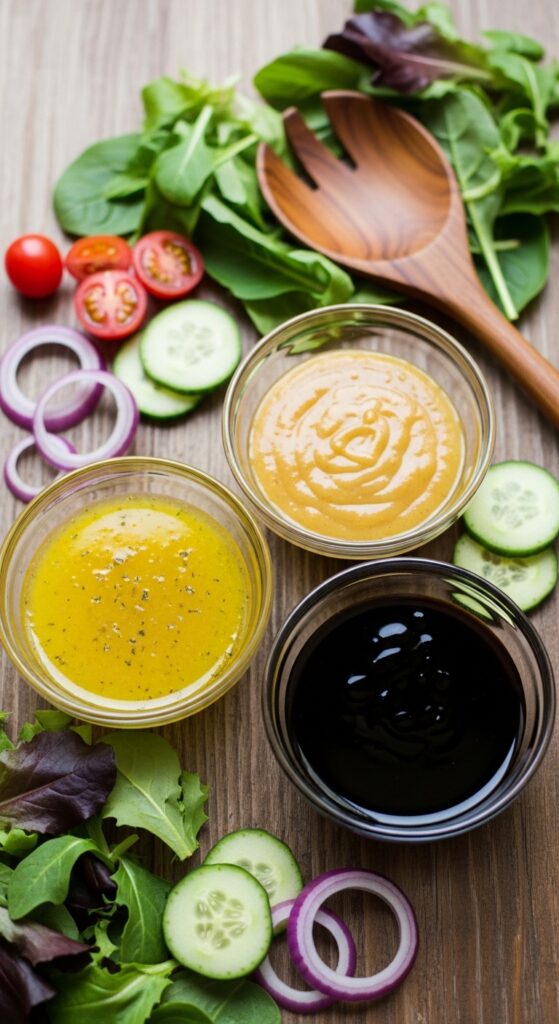
3 Quick Dressing Recipes You Can Make Right Now
1. Classic Lemon Vinaigrette
- 3 tbsp olive oil
- 1 tbsp fresh lemon juice
- ½ tsp Dijon mustard
- Pinch salt & pepper
Bright, fresh, and perfect for simple green salads.
2. Honey Mustard Dressing
- 3 tbsp olive oil
- 1 tbsp apple cider vinegar
- 1 tsp Dijon mustard
- 1 tsp honey
- Pinch salt
Great for chicken salads or roasted vegetable bowls.
3. Simple Balsamic Dressing
- 3 tbsp olive oil
- 1 tbsp balsamic vinegar
- ½ tsp Dijon
- Pinch salt
- Optional: ½ tsp honey
Rich and slightly sweet — perfect for spinach or caprese salads.
Common Mistakes to Avoid
Even simple dressing can go wrong. Watch out for:
- Using too much vinegar
- Forgetting salt
- Skipping the taste test
- Using low-quality oil
- Not shaking before serving
Remember: Oil and vinegar naturally separate. Just give it a quick shake before pouring.
How to Store Homemade Dressing
Store in a sealed jar in the fridge.
Most vinaigrettes last:
- 5–7 days
If using fresh garlic or herbs, aim for 3–5 days for best flavor.
If the oil solidifies in the fridge, let it sit at room temperature for 10–15 minutes and shake again.
The Takeaway
Making salad dressing from scratch takes:
- 1 minute to measure
- 20 seconds to shake
- And zero mystery ingredients
Once you master the 3:1 ratio, you can create endless combinations that taste fresher and better than anything store-bought.
Try one tonight with your next salad.
And save this guide so you can skip the bottled dressing for good. 🥗✨
Leave a Reply