There’s nothing sadder than dry, gluey mashed potatoes—especially when you’re trying not to drown them in butter to fix the problem. The good news? Ultra-creamy mashed potatoes don’t actually depend on extra butter at all. With the right techniques and a few smart swaps, you can get that smooth, rich, restaurant-style texture without feeling heavy afterward.
Whether you’re cooking for a weeknight dinner, a holiday table, or just want better potatoes in general, this guide will show you exactly how to make mashed potatoes creamy without piling on more butter.
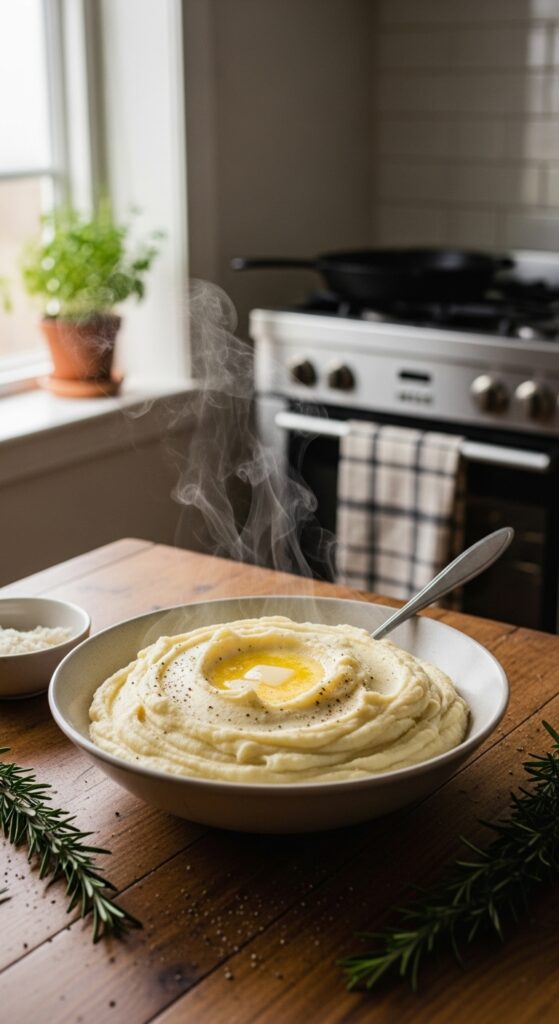
Step 1: Choose the Right Potatoes
Creaminess starts before you even turn on the stove. Not all potatoes mash the same way.
Best choices for creamy mashed potatoes:
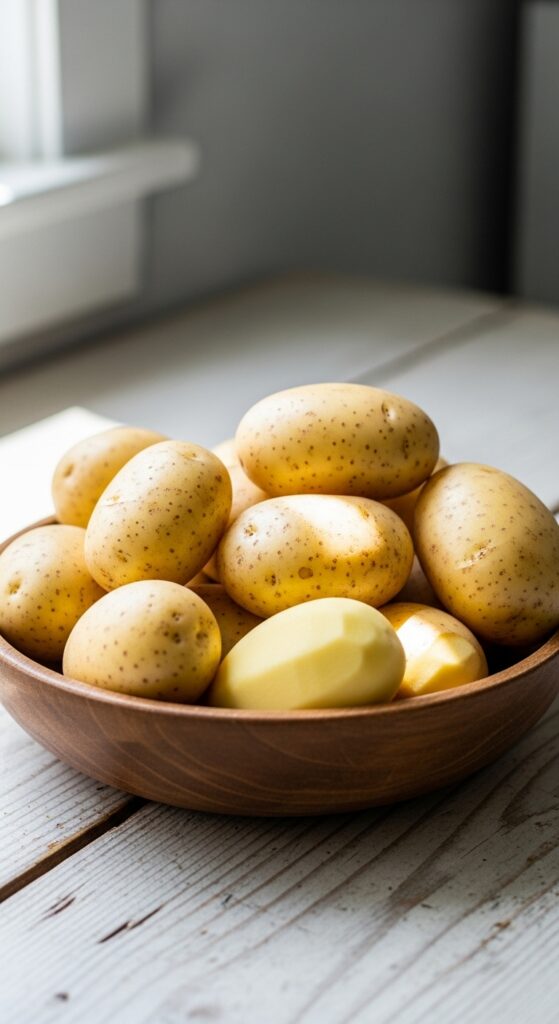
- Yukon Gold – naturally buttery and smooth
- Yellow potatoes – creamy without much effort
- Russet potatoes – fluffy, but need careful handling
If you want creamy without extra fat, Yukon Golds are your best friend. They have less starch than russets and break down smoothly without turning gummy.
Skip waxy potatoes like red or fingerling potatoes—they’re better for roasting and salads, not mashing.
Step 2: Cook Them the Right Way
How you cook your potatoes has a huge impact on texture.
Do this instead:
- Start potatoes in cold, well-salted water
- Bring to a gentle boil
- Cook until a fork slides in easily
Starting in cold water helps the potatoes cook evenly from the inside out. If you drop them straight into boiling water, the outside overcooks before the inside softens.
Once cooked, drain thoroughly and let them sit in the hot pot for 1–2 minutes. This allows extra moisture to evaporate, which helps prevent watery mashed potatoes.
Step 3: Warm Your Dairy (This Is Huge)
Cold milk or cream is one of the biggest reasons mashed potatoes turn dense and dull.
Instead of pouring cold liquid straight in:
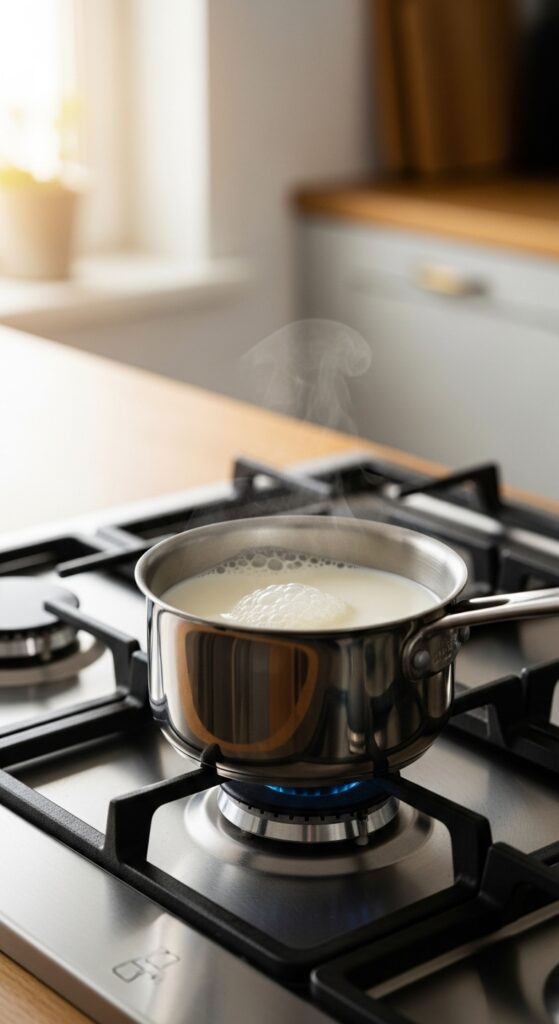
- Warm milk, cream, or half-and-half gently
- Add it slowly while mashing
Warm dairy absorbs more smoothly into the potatoes, creating a creamy texture without needing extra butter to compensate.
Good butter-free or low-butter options:
- Whole milk
- Half-and-half
- Unsweetened oat milk (for dairy-free)
- Unsweetened almond milk (neutral flavor)
Step 4: Use the Right Mashing Tool
Your tool matters more than you think.
Best options for creamy potatoes:
- Potato masher
- Ricer
- Food mill
Avoid:
- Blenders
- Food processors
- Hand mixers (easy to overdo)
Overmixing releases too much starch, turning potatoes gluey instead of creamy. Mash gently and stop as soon as the potatoes are smooth.
If you want ultra-silky mashed potatoes without butter, a potato ricer is the gold standard.
Step 5: Add Creaminess Without Butter
Here’s where the magic happens. Instead of more butter, use ingredients that add richness and moisture naturally.
Great butter-light add-ins:
- Plain Greek yogurt (adds creaminess + slight tang)
- Sour cream (rich, smooth, and flavorful)
- Cream cheese (a little goes a long way)
- Olive oil (silky texture, great flavor)
- Chicken or vegetable broth (for moisture without fat)
Start small and taste as you go. Even a few tablespoons can transform the texture.
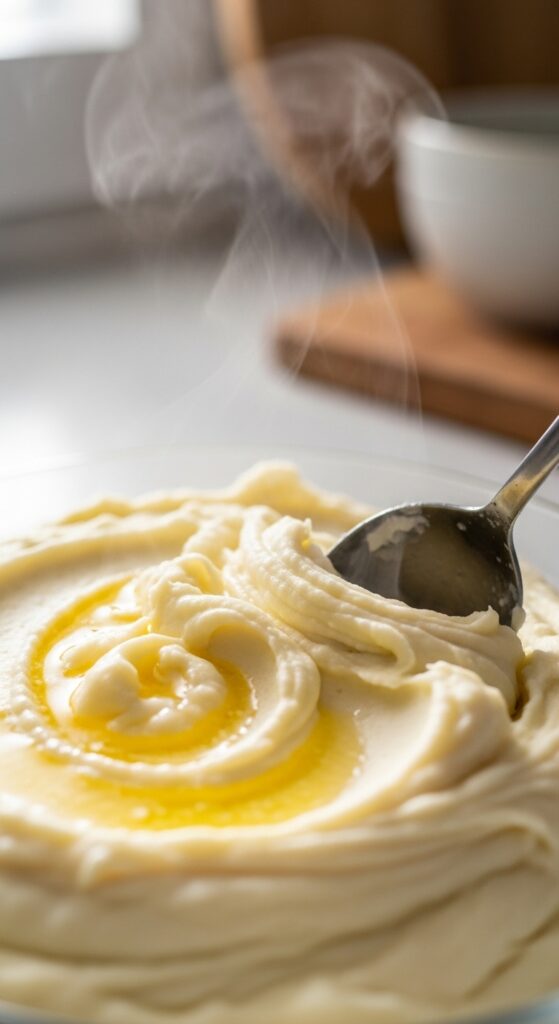
Step 6: Season Smarter, Not Heavier
Sometimes mashed potatoes taste flat, which makes us reach for more butter. Proper seasoning can fix that.
Season in layers:
- Salt the cooking water generously
- Taste and adjust after mashing
- Add freshly ground black pepper
Optional flavor boosters (no butter needed):
- Roasted garlic
- Chives or green onions
- A splash of lemon juice for balance
Well-seasoned potatoes feel richer—even without extra fat.
Common Mistakes That Ruin Creaminess
Avoid these pitfalls:
- Adding cold milk straight from the fridge
- Overmixing or whipping too aggressively
- Skipping the drying step after draining
- Using the wrong potato variety
- Under-seasoning and overcompensating with fat
Fixing these alone can dramatically improve your mashed potatoes.
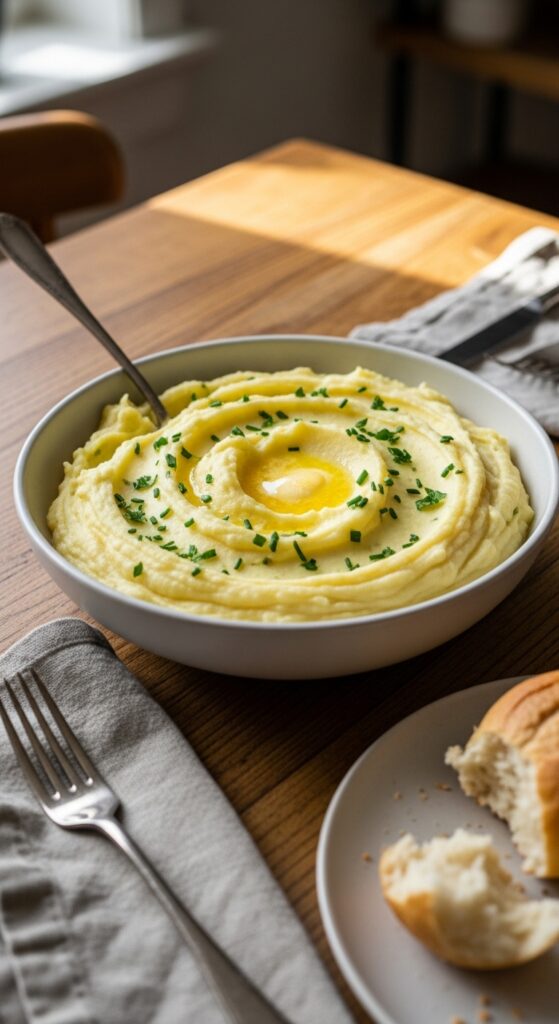
Final Touches for Restaurant-Style Results
Before serving:
- Stir gently with a spatula for a smooth finish
- Add a drizzle of olive oil instead of butter on top
- Garnish with herbs for visual appeal
The Takeaway
You don’t need extra butter to make mashed potatoes creamy—you need the right techniques. From choosing the best potatoes to warming your dairy and mixing gently, small changes make a big difference. Once you try these methods, you’ll never go back to heavy, greasy mashed potatoes again.
Save this for your next dinner, and try it the next time mashed potatoes are on the menu.
Leave a Reply