Christmas stuffing is one of the dishes everyone looks forward to—warm, cozy, savory, and perfect alongside turkey, chicken, or ham. The good news? You can keep the traditional comfort while adding small upgrades that make the flavors deeper, richer, and more exciting. This version stays true to classic Christmas stuffing but adds little twists that elevate every bite without adding stress or cost.
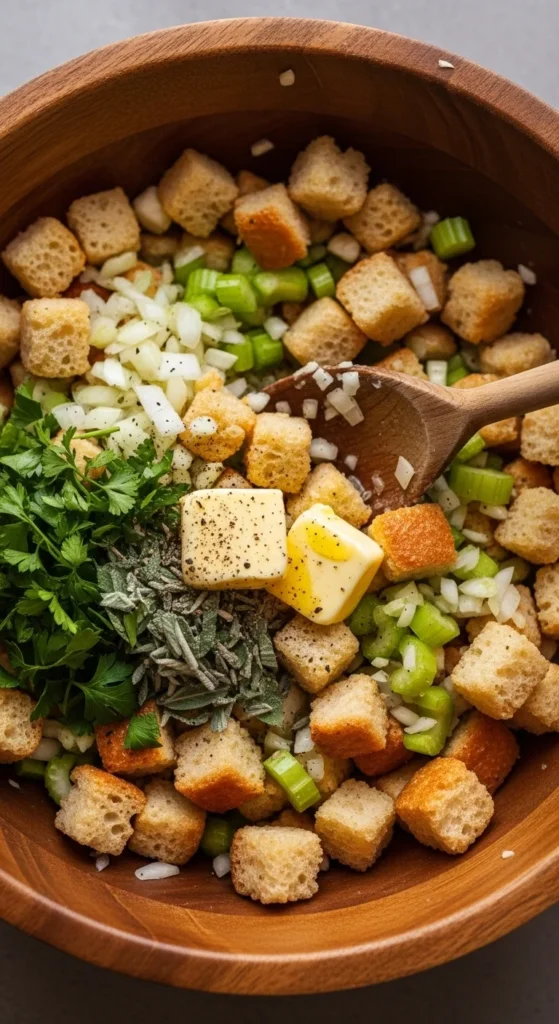
Let’s walk through how to build the perfect stuffing that tastes nostalgic but better than ever.
Choose the Right Bread (the Foundation of Great Stuffing)
Stuffing starts with the bread, so picking the right kind makes a big difference.
Best bread options:
- French bread
- Sourdough
- Italian loaf
- Brioche (for a slightly sweeter touch)
Cut into cubes and dry them out:
- Either leave them on the counter overnight
- Or bake at 300°F (150°C) for 12–15 minutes
Dry bread soaks up flavor better and keeps the stuffing from turning mushy.
Build the Classic Flavor Base
This is where the stuffing gets its cozy smell and familiar holiday taste.
Sauté these ingredients:
- Butter
- Chopped onions
- Diced celery
- Garlic
- Salt and pepper
- A pinch of poultry seasoning
Cook until everything softens and smells warm and aromatic.
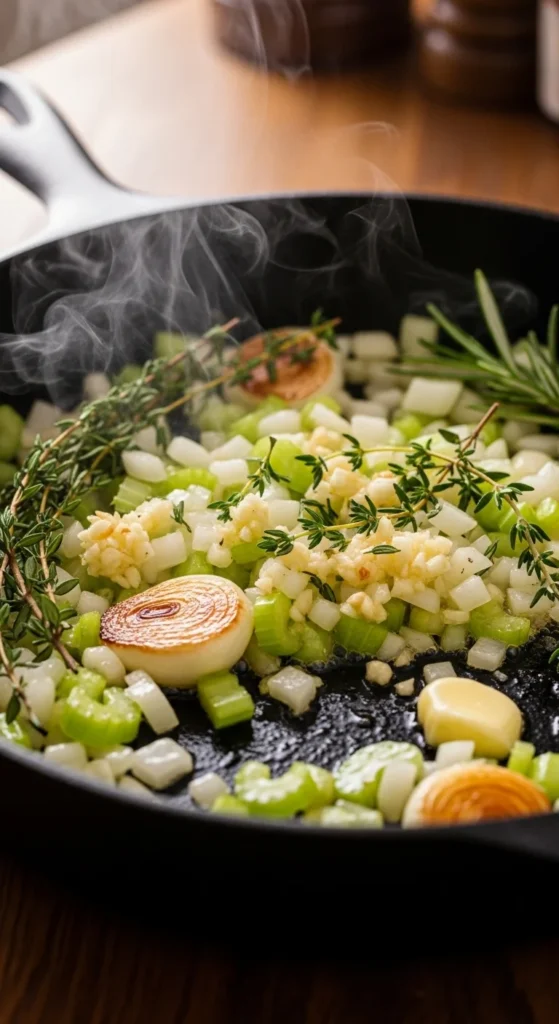
This mixture becomes the backbone of your stuffing.
Add a Flavor Upgrade Without Changing the Tradition
Here’s where you make the stuffing special. Choose one or combine a few—these additions make everything taste deeper without overpowering the classic feel.
Easy flavor upgrade ideas:
- Sautéed mushrooms for earthiness
- Crispy sausage pieces for richness
- Diced apples for sweetness
- Chopped walnuts or pecans for crunch
- Fresh herbs like rosemary, sage, and thyme
- Dried cranberries for holiday color
You don’t need all of them—pick your favorite one or two.
Bring It Together With Broth and Butter
Once the bread cubes and sautéed vegetables are ready, it’s time to mix.
Combine in a large bowl:
- Bread cubes
- Sautéed vegetables
- Optional add-ins
- Melted butter
Slowly pour warm chicken or vegetable broth over the top. Add just enough for the bread to soften but still hold shape.
If it feels too wet, add more bread.
If it feels dry, add a little more broth.
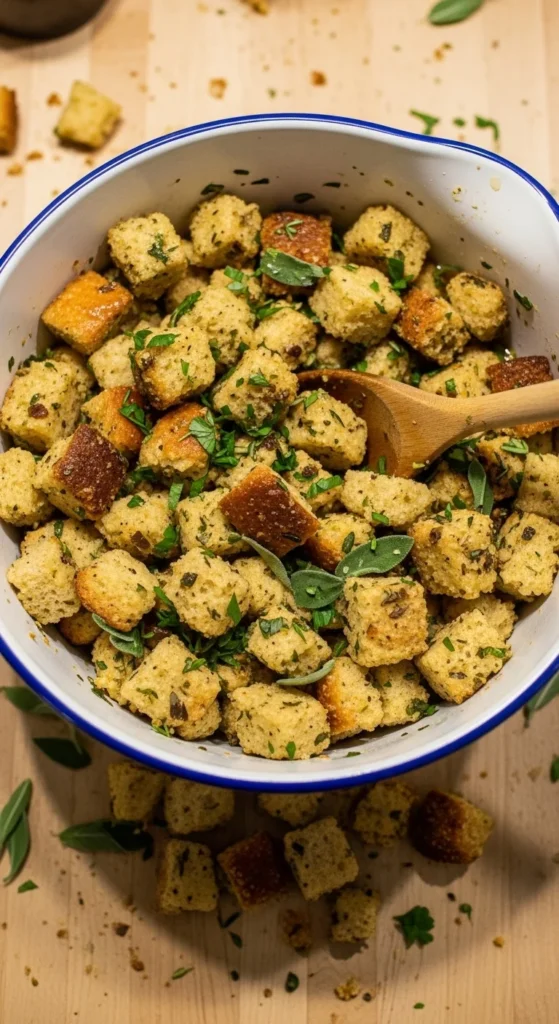
Taste and adjust the seasoning now—it’s easier before baking.
Bake for the Perfect Texture
The ideal stuffing has soft, flavorful insides with a lightly crisp top.
Best baking method:
- Preheat oven to 350°F (175°C)
- Grease a baking dish
- Spread stuffing evenly
- Cover with foil and bake for 25 minutes
- Remove foil and bake another 15–20 minutes for browning
If you like extra crispy edges, use a larger, shallower dish.
If you want softer stuffing, use a deeper dish and keep it covered longer.
Optional: Turn It Into Stuffing Muffins
Want a fun twist? Scoop stuffing into muffin tins and bake. The result: perfectly crisp edges and cute individual servings.
These work great for kids or for guests who want their own portion.
Serve With Holiday-Ready Finishing Touches
Small garnishes go a long way in making the dish look festive.
Try:
- Fresh chopped parsley
- A sprinkle of dried cranberries
- A drizzle of melted butter
- Toasted nuts on top
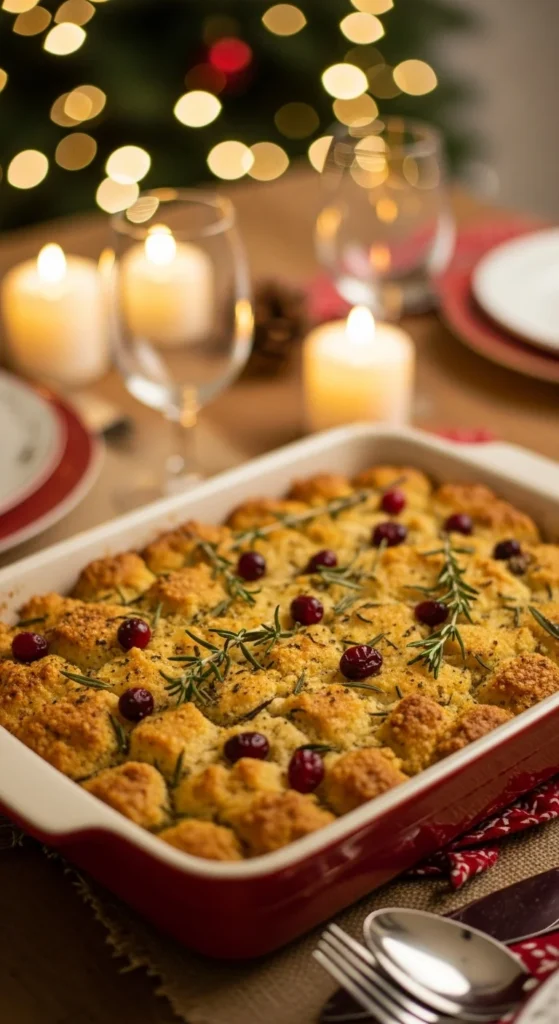
These touches take just seconds but make your stuffing look restaurant-worthy.
Tips for Stress-Free Christmas Stuffing
- Prep ahead: You can assemble stuffing the night before and bake the next day.
- Don’t oversoak: Add broth gradually so it stays fluffy.
- Taste as you go: Stuffing is easy to adjust before baking.
- Use leftover bread: Great for staying on budget.
- Crispy or soft? Adjust foil and baking time to match your preference.
Stuffing is forgiving—just focus on flavor and texture.
Your Christmas Stuffing Will Steal the Spotlight
Classic Christmas stuffing has a special place at the holiday table, and with these small upgrades, it becomes even better. Cozy, flavorful, and flexible, it pairs beautifully with any main dish while staying easy on your budget.
Save this recipe so you can make the best stuffing every Christmas!
Leave a Reply