Ever open your fridge, stare at random leftovers, and think… what am I supposed to do with this?
A half bell pepper. One lonely carrot. Some leftover chicken. A handful of spinach.
Good news: you’re one pan away from dinner.
Stir fry is one of the most flexible, forgiving, and fast meals you can make. You don’t need a strict recipe. You don’t need special ingredients. You just need a simple formula.
Once you learn it, you can turn literally anything into a delicious meal.
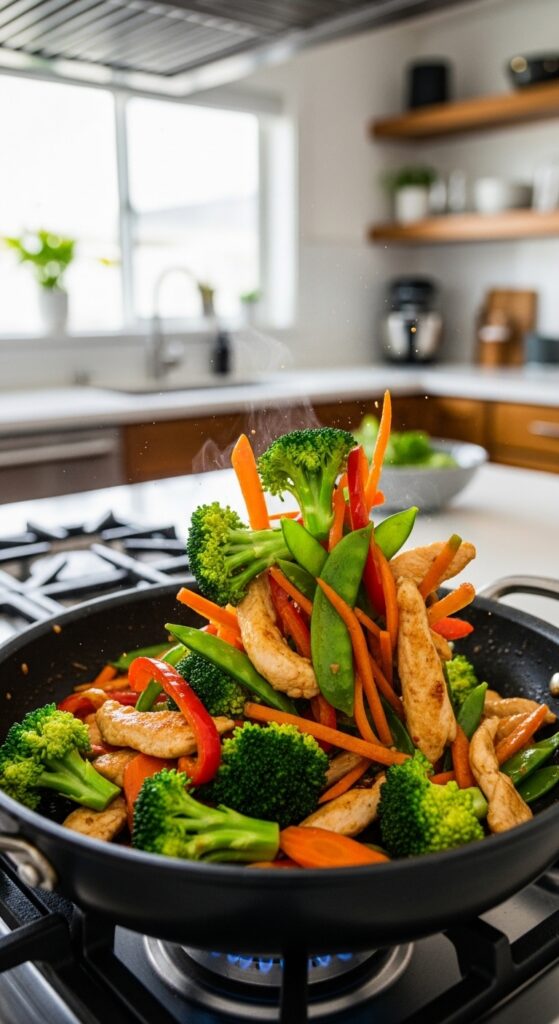
Let’s break it down.
Step 1: Start with the Stir Fry Formula
Think of stir fry like a build-your-own bowl. Every good one includes:
- Protein
- Vegetables
- A sauce
- A base (optional but recommended)
You can mix and match based on what you already have.
Protein Ideas:
- Chicken
- Beef
- Shrimp
- Tofu
- Eggs
- Leftover rotisserie meat
- Even beans in a pinch
Vegetable Ideas:
- Broccoli
- Bell peppers
- Carrots
- Zucchini
- Mushrooms
- Snap peas
- Cabbage
- Spinach
- Frozen veggie blends
No perfect combo required. If it can be sautéed, it can be stir fried.
Step 2: Prep Everything Before You Start
Stir fry cooks fast. Like… really fast.
That means you want everything:
- Chopped
- Measured
- Ready to toss in
Cut vegetables into similar-sized pieces so they cook evenly. Thin slices cook faster than big chunks.
If you’re using meat, slice it thin across the grain for tenderness.
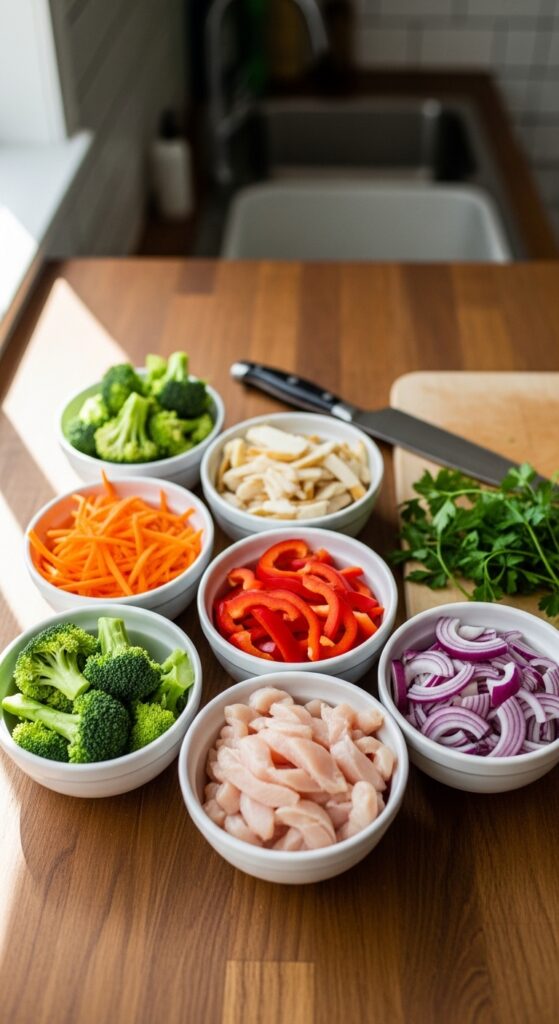
This little bit of prep makes the entire process smooth and stress-free.
Step 3: Use High Heat and the Right Pan
The magic of stir fry happens with high heat.
Use:
- A wok (ideal)
- Or a large skillet (totally fine)
Heat your pan first. Then add oil (something with a higher smoke point like avocado oil or vegetable oil).
You want a slight sizzle when ingredients hit the pan.
Step 4: Cook in the Right Order
Here’s the golden rule: Don’t overcrowd the pan.
If needed, cook in batches.
The Order:
- Protein first
- Cook until browned
- Remove from pan and set aside
- Hard vegetables next
- Carrots
- Broccoli
- Bell peppers
- Softer vegetables last
- Mushrooms
- Zucchini
- Spinach
- Add protein back in
- Pour in sauce
- Toss everything together
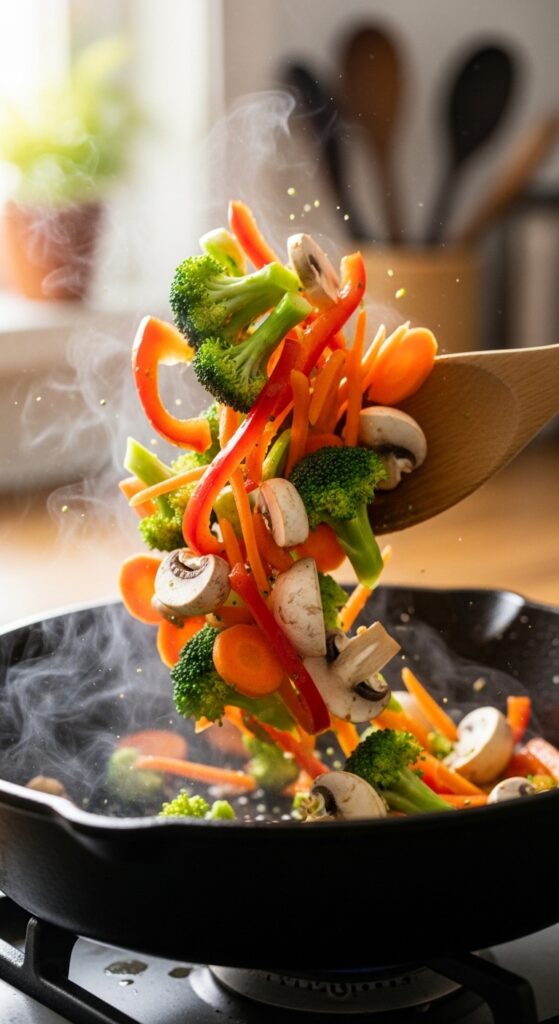
Cook just until vegetables are tender-crisp. You want texture, not mush.
Step 5: Make an Easy 5-Minute Stir Fry Sauce
You don’t need bottled sauce (unless you want to).
Here’s a simple formula:
- 1/4 cup soy sauce
- 1 tablespoon honey or brown sugar
- 1–2 teaspoons minced garlic
- 1 teaspoon grated ginger (optional)
- 1 teaspoon cornstarch (for thickening)
- Splash of water or broth
Whisk it together before adding to the pan.
Let it simmer for 1–2 minutes until slightly thickened.
Taste and adjust:
- More sweetness?
- More salt?
- A squeeze of lime?
- A dash of chili flakes?
Make it yours.
Step 6: Choose a Base (Or Skip It)
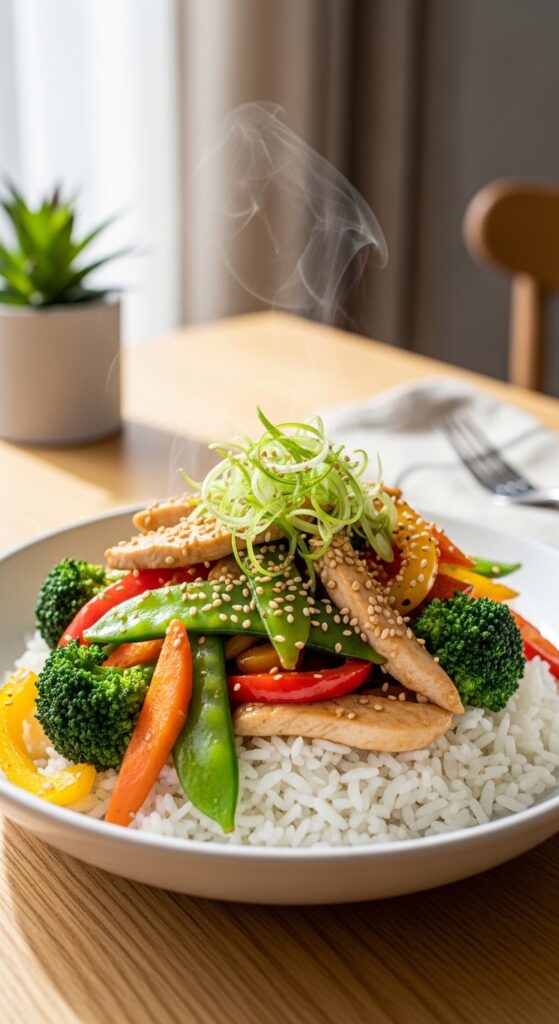
Your stir fry can be served over:
- White rice
- Brown rice
- Noodles
- Quinoa
- Cauliflower rice
- Or even wrapped in lettuce
Or skip the base entirely and keep it low-carb.
Why This Method Works Every Time
Stir fry works because it’s built on:
- High heat
- Quick cooking
- Balanced sauce
- Flexible ingredients
It’s less about following rules and more about following a simple structure.
Once you understand the pattern, you’ll never need a recipe again.
Common Stir Fry Mistakes to Avoid
Even simple meals can go wrong. Watch for these:
- Overcrowding the pan (leads to steaming, not browning)
- Adding sauce too early
- Cutting vegetables too large
- Overcooking
Remember: stir fry should be quick, vibrant, and slightly crisp.
Pro Tips for Next-Level Flavor
Want it to taste like takeout (or better)?
Try:
- Toasted sesame oil at the end (a little goes a long way)
- A splash of rice vinegar
- Crushed peanuts or cashews
- Fresh green onions
- A squeeze of lime
- Chili paste for heat
Layering small flavor boosts makes a big difference.
Final Thoughts
Stir fry is the ultimate “use what you have” meal.
No rules.
No stress.
No wasted food.
Just one hot pan and a little confidence.
Next time you’re staring at random ingredients, don’t overthink it. Toss them together, add a simple sauce, and let high heat do the work.
You’ve got dinner.
Save this guide for the next fridge clean-out night — and try it this week.
Leave a Reply