Cracking an egg sounds simple—until you’re fishing shell shards out of a bowl or watching the yolk burst before it even hits the pan. Whether you’re cooking breakfast, baking a cake, or meal-prepping for the week, cracking eggs cleanly is one of those small kitchen skills that makes everything easier. The good news? It’s not about strength or luck. It’s about technique.
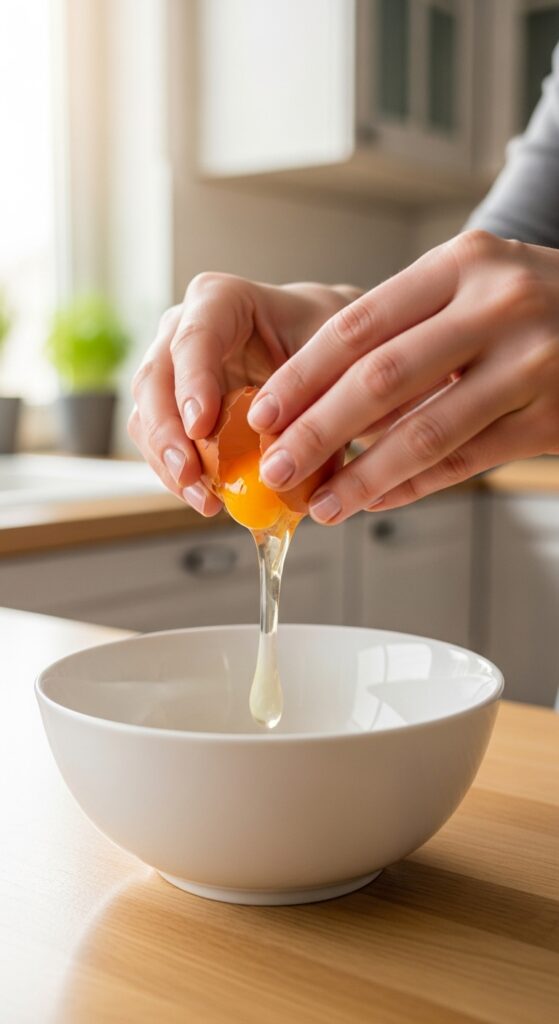
Once you learn the right way, you’ll crack eggs smoothly, confidently, and mess-free every single time.
Why Egg-Cracking Technique Matters
Cracking an egg properly isn’t just about avoiding shells. The way you crack it affects:
- Yolk integrity (especially important for frying or poaching)
- Food safety (less mess, less contamination)
- Speed and confidence in the kitchen
- Presentation, if you care about how your food looks
A clean crack sets you up for better cooking from the very first step.
Step 1: Use the Right Surface
This is the biggest mistake most people make.
❌ Cracking eggs on the edge of a bowl
✅ Cracking eggs on a flat surface
When you crack an egg on a bowl edge, the shell tends to shatter inward, sending tiny shards straight into the egg. A flat surface creates a controlled fracture that splits the shell cleanly in two.
Good flat surfaces include:
- A countertop
- A cutting board
- A plate
Tap firmly—but not aggressively—until you hear a crack.
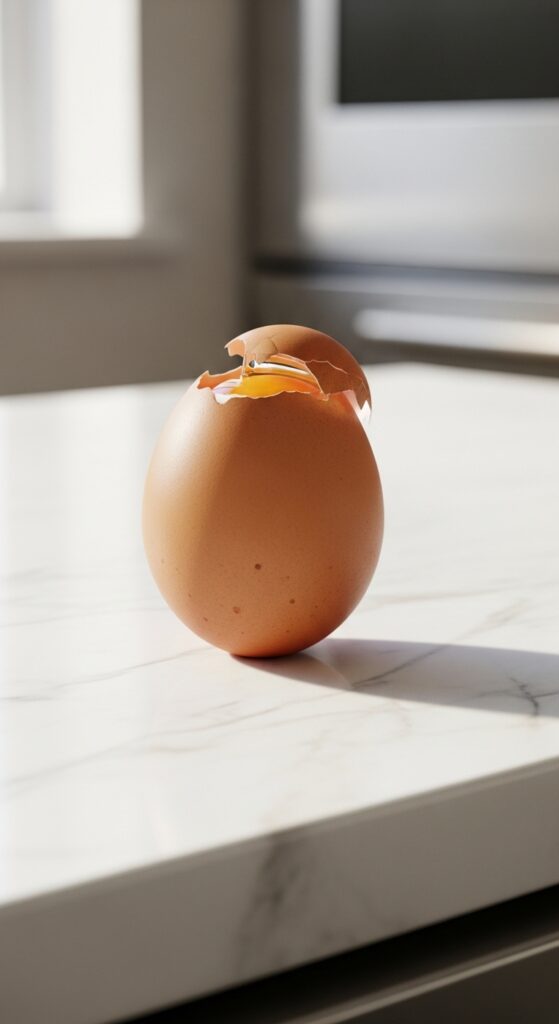
Step 2: Crack with Confidence, Not Force
Once the shell is cracked, resist the urge to squeeze.
- Hold the egg with both thumbs placed at the crack
- Pull the shell halves apart slowly and evenly
- Let gravity do the work
If you squeeze too hard, the yolk will break. If you hesitate, the shell may crumble instead of opening cleanly. A smooth, confident motion is key.
Pro tip: Crack eggs one at a time into a separate small bowl if you’re baking or cooking for guests. That way, if a shell sneaks in or the egg isn’t fresh, it won’t ruin the whole dish.
Step 3: Keep the Yolk Intact
If you want a perfect sunny-side-up egg or a photogenic poached egg, protecting the yolk is everything.
Here’s how:
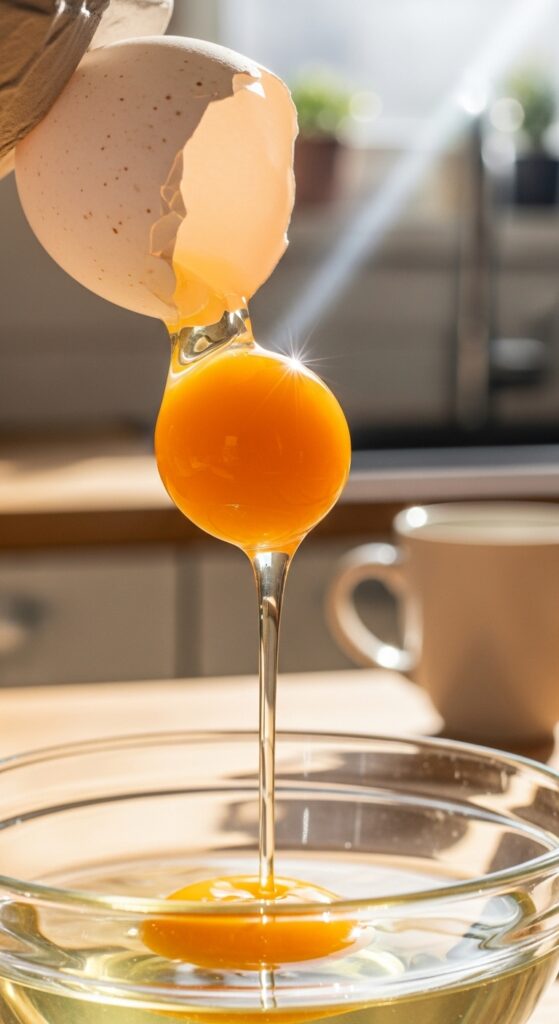
- Crack the egg close to the bowl or pan, not from high above
- Open the shell gently so the yolk slides out naturally
- Avoid letting the yolk hit the shell edge on the way out
Lower distance = less impact = intact yolk.
Common Egg-Cracking Mistakes (and How to Fix Them)
Even experienced cooks make these slip-ups. Here’s how to avoid them:
- Using one hand only
→ Use two hands for more control. - Over-cracking
→ One solid tap is enough. Multiple taps weaken the shell unevenly. - Cracking directly into a hot pan
→ This increases the chance of broken yolks and shells. Crack into a bowl first when precision matters. - Trying to catch shell pieces with your fingers
→ Use a larger shell piece instead—it grabs shards more easily.
Pro Tips for Extra-Smooth Cracking
Want to level up even more? These tips make egg cracking effortless:
- Cold eggs crack cleaner than room-temperature eggs
- Wash hands after cracking, not before—washing beforehand can transfer bacteria
- Practice with inexpensive eggs to build confidence
- Stay relaxed—tension leads to messy cracks
And remember: even professional chefs cracked a lot of bad eggs before mastering the technique.
When You Need to Separate Yolks and Whites
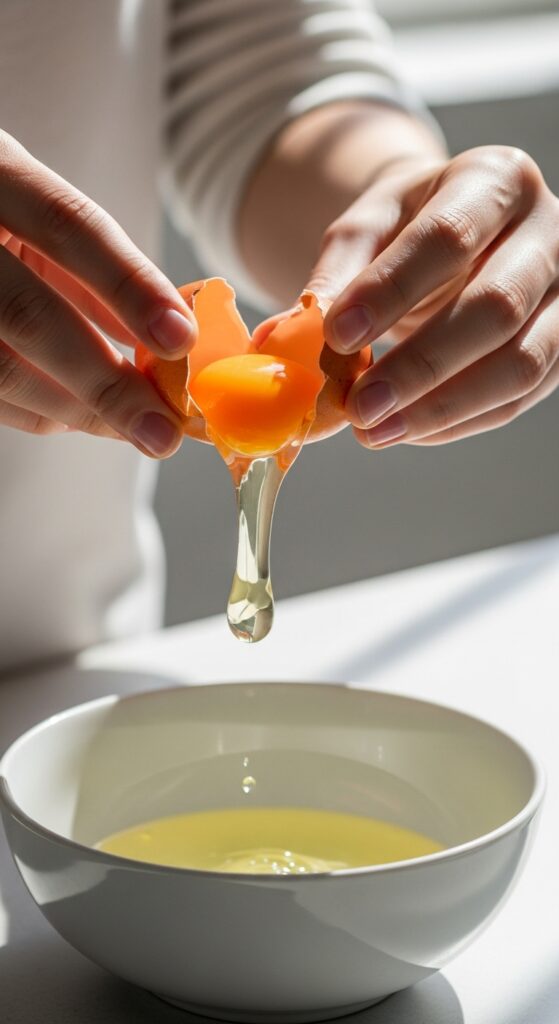
If you’re cracking eggs to separate them:
- Crack the egg as usual into a bowl
- Gently pass the yolk back and forth between shell halves
- Let the whites fall naturally
Or, even easier—use clean hands. The yolk stays intact, and the whites slip right through your fingers.
Final Takeaway
Cracking an egg perfectly isn’t about being fancy—it’s about using the right surface, a confident motion, and a little patience. Once you switch to cracking on a flat surface and opening the shell gently, broken yolks and shell fragments become a thing of the past.
Try this method the next time you cook, and you’ll notice the difference immediately.
Save this for later, and pin this guide so you always crack eggs like a pro 🥚✨
Leave a Reply