We’ve all done it.
You boil pasta, drain it, add sauce… and somehow it turns into a soft, sticky mess instead of that perfect, tender bite.
Overcooked pasta can ruin an otherwise amazing meal. But the good news? Cooking pasta the right way is simple once you understand a few key principles.
If you want pasta that’s perfectly al dente — tender with just a slight bite — this guide will walk you through it step by step.
Let’s get into it.
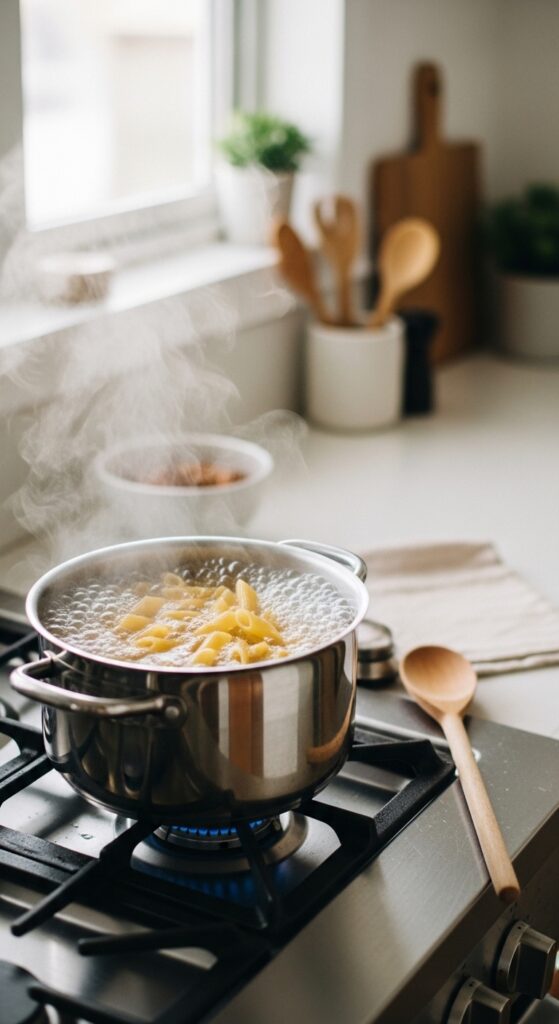
Step 1: Use a Large Pot (Yes, It Matters)
Crowded pasta = sticky pasta.
Choose a large pot so the noodles have room to move freely while boiling. This prevents clumping and ensures even cooking.
General rule:
- 4–6 quarts of water per 1 pound of pasta
Plenty of water keeps the temperature stable when the pasta goes in, which helps it cook evenly.
Step 2: Salt the Water Properly
This is where flavor begins.
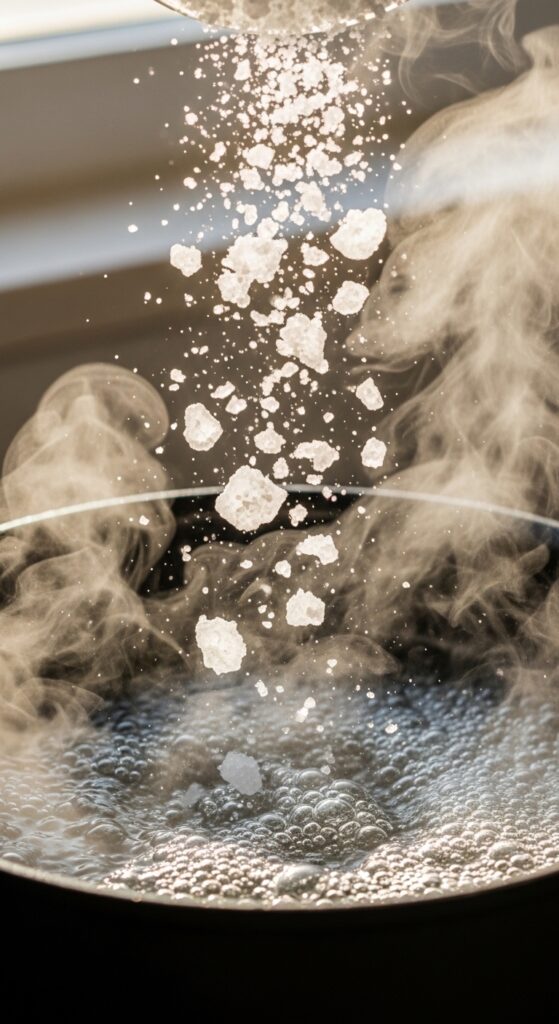
Pasta itself doesn’t have much flavor — the salt in the water seasons it from the inside out.
Add salt after the water comes to a boil.
How much?
- About 1–1½ tablespoons per 4 quarts of water
The water should taste slightly salty (like mild seawater).
Don’t skip this step. It makes a noticeable difference.
Step 3: Add Pasta to Fully Boiling Water
Wait until the water is at a rolling boil before adding the pasta.
If you add it too early:
- It can turn gummy
- It may cook unevenly
- It’s more likely to stick
Once you add the pasta:
- Stir immediately
- Stir again after about 1 minute
This prevents clumping at the bottom.
Step 4: Follow the Time — But Don’t Trust It Completely
The cooking time on the box is a guide, not a rule.
Set a timer for 1–2 minutes less than the package instructions.
Then taste test.
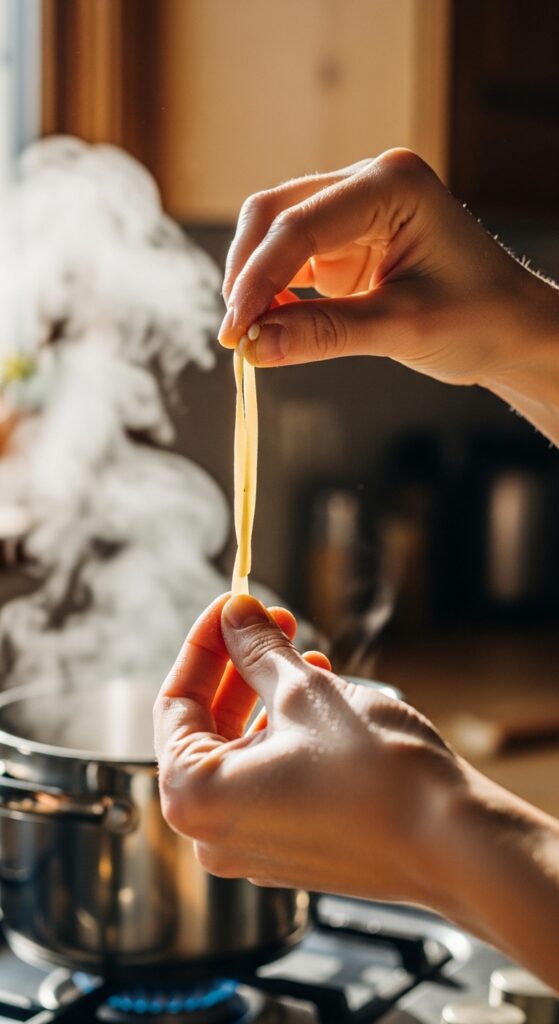
You’re looking for al dente, which means:
- Tender
- Slight resistance in the center
- Not crunchy
- Not mushy
If it’s soft all the way through with no bite, it’s already overcooked.
Step 5: Save Some Pasta Water (Secret Weapon)
Before draining, scoop out about ½–1 cup of pasta water.
This starchy water helps:
- Thicken sauces
- Help sauce cling to noodles
- Create a silky texture
It’s one of the most important restaurant tricks.
Step 6: Don’t Rinse the Pasta
Unless you’re making pasta salad — don’t rinse.
Rinsing removes:
- Surface starch
- Flavor
- Sauce-binding power
Instead, drain the pasta and immediately transfer it to your sauce.
Step 7: Finish Cooking in the Sauce
This is the real secret to avoiding overcooked pasta.
Once drained, add the pasta directly into the pan with your sauce.
Cook together for 1–2 minutes.
Add a splash of reserved pasta water if needed.
Why this works:
- Pasta absorbs flavor from the sauce
- The final cooking happens in a controlled way
- The starch helps everything come together
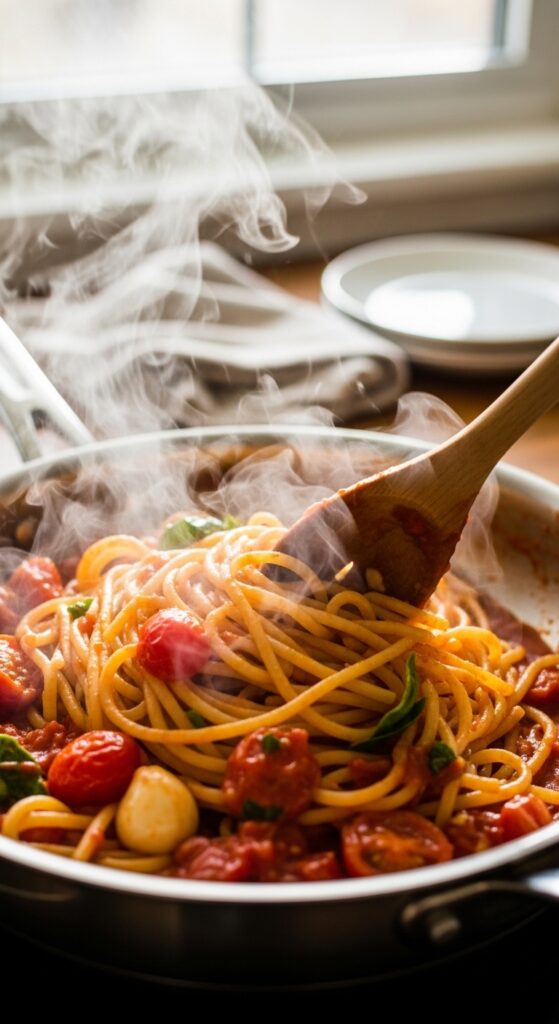
This final step locks in texture and flavor.
Common Mistakes That Lead to Overcooked Pasta
Avoid these and you’ll instantly improve your results:
- Using too little water
- Not salting the water
- Walking away and forgetting it
- Cooking strictly by the box time
- Letting pasta sit in hot water after turning off heat
- Draining and leaving it in the colander too long
Pasta continues to cook from residual heat — so timing matters.
Pro Tips for Perfect Texture Every Time
1. Stir Early
Most sticking happens in the first 2 minutes.
2. Keep It at a Steady Boil
A gentle simmer won’t cook evenly.
3. Undercook Slightly for Baked Pasta
If making baked ziti or lasagna, cook 2–3 minutes less than usual.
The oven will finish the job.
4. Use a Timer
Even experienced cooks use one. It prevents distraction mistakes.
How to Know It’s Perfect
Perfect pasta should:
- Hold its shape
- Have a slight chew
- Not stick together
- Not feel soft or mushy
If you can slice through it with zero resistance — it’s overdone.
If the center is white and hard — it needs more time.
Aim for that perfect middle ground.
The Takeaway
Cooking pasta the right way isn’t complicated.
It’s about:
- Plenty of water
- Proper salting
- Watching the timing
- Tasting before draining
- Finishing in the sauce
Once you master these small adjustments, your pasta will taste restaurant-quality every time.
Try this method tonight.
And save this guide for your next pasta dinner. 🍝
Leave a Reply