Pasta seems simple. Boil water, add noodles, drain, done. And yet, somehow, it often turns out mushy, bland, or broken. If you’ve ever wondered why restaurant pasta has that perfect bite while homemade pasta feels a little sad, the secret is technique, not fancy ingredients. Learning how to cook pasta the right way takes just a few small adjustments, and once you know them, you’ll never overcook pasta again.
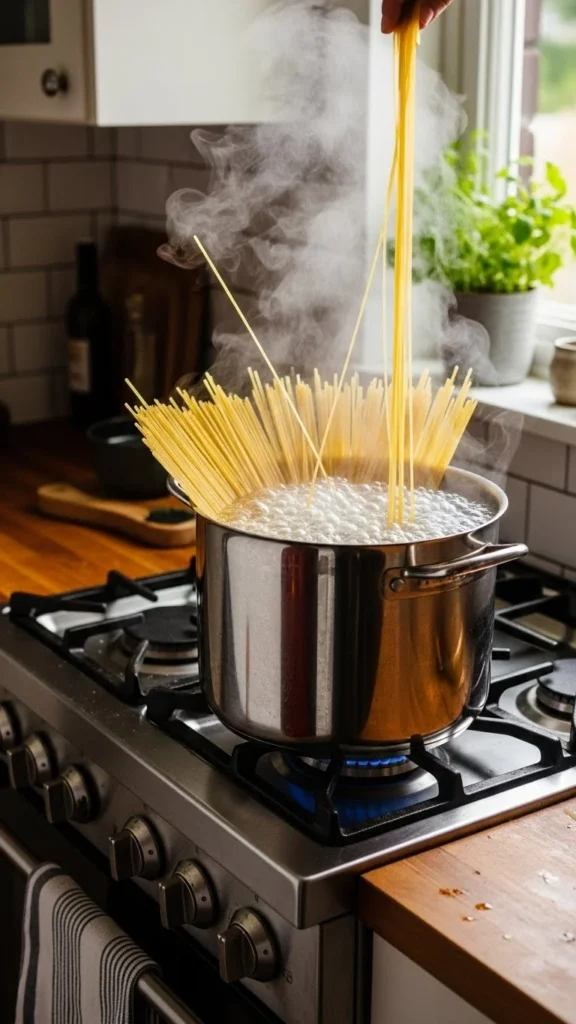
Let’s break it down step by step so your pasta comes out perfectly al dente every single time.
Why Pasta Gets Overcooked So Easily
Overcooked pasta usually comes from one of three mistakes:
- Not enough water
- Cooking too long
- Ignoring timing and texture
Pasta keeps cooking even after it’s drained, so just a minute too long can turn it from tender to mushy. The goal is al dente, which means “to the tooth” in Italian, tender but with a slight bite in the center.
Start With More Water Than You Think You Need
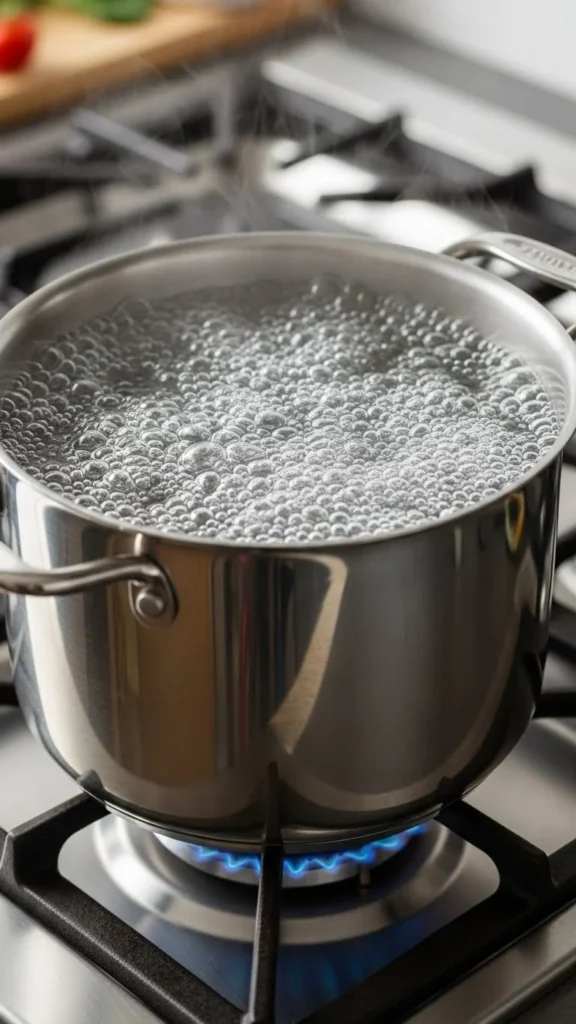
One of the biggest mistakes is using too little water. Pasta needs room to move freely while cooking.
Follow this simple rule:
- Use at least 4–5 quarts of water per pound of pasta
More water means:
- Even cooking
- Less sticking
- Better texture
A large pot is your best friend here.
Salt the Water Like You Mean It
If your pasta tastes bland, it’s usually because the water wasn’t salted enough. Pasta absorbs water as it cooks, so this is your only chance to season it properly.
How much salt?
- About 1–2 tablespoons of salt per pot
- The water should taste like the sea
Do not add oil to the water. It doesn’t prevent sticking and can keep sauce from clinging to the pasta later.
Add Pasta Only After the Water Is Boiling
Patience matters here. Always wait for a full rolling boil before adding pasta.
Once the pasta goes in:
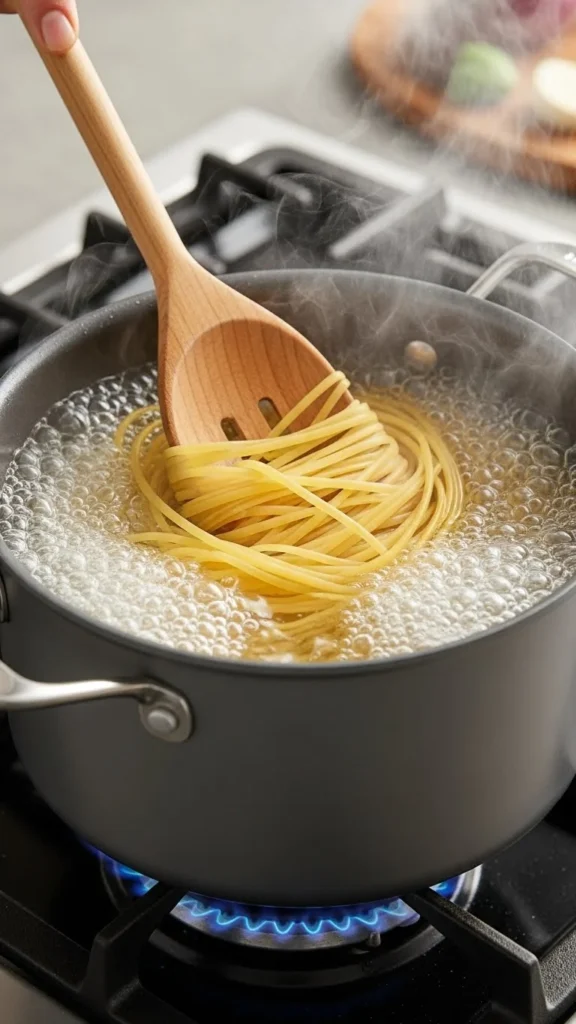
- Stir immediately to prevent sticking
- Stir again during the first minute
This is especially important for long noodles like spaghetti and fettuccine.
Cook for Al Dente, Not the Box Time
The time on the package is only a guideline. Real perfection comes from tasting.
Here’s how to get it right:
- Set a timer for 1–2 minutes less than the package says
- Start tasting early
- Look for a tender outside with a slight firmness inside
If you see a thin white line in the center of the pasta when you bite it, you’re close. That’s the sweet spot.
Save Pasta Water (This Is Not Optional)
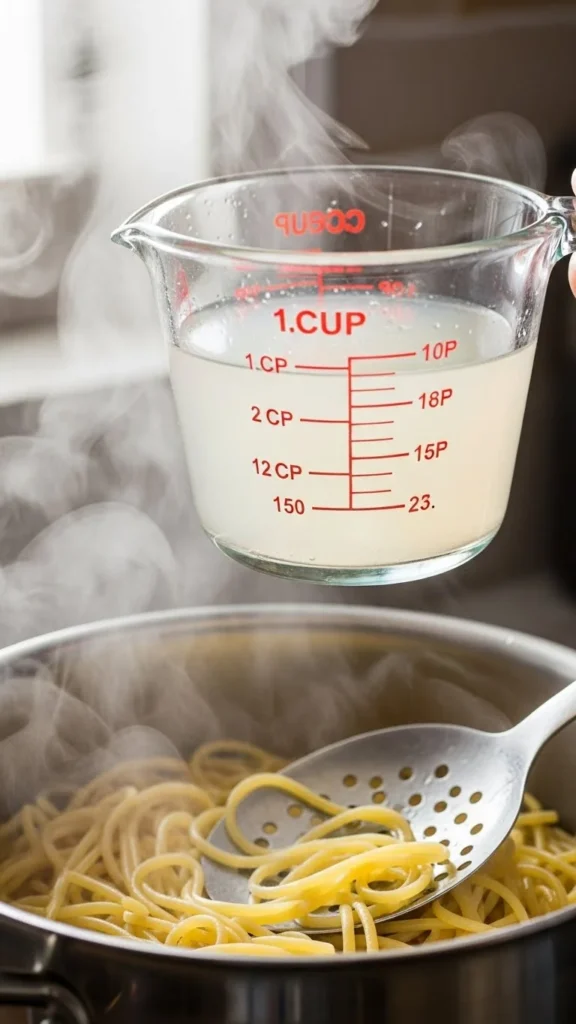
Before draining, scoop out about 1 cup of pasta water. This starchy liquid is liquid gold.
Why it matters:
- Helps sauces cling to pasta
- Adds silkiness without cream
- Fixes dry or thick sauces instantly
Professional kitchens use this trick every day.
Drain Properly, Don’t Rinse
Drain pasta in a colander, but never rinse it unless you’re making pasta salad. Rinsing washes away the starch that helps sauce stick.
Also:
- Don’t let pasta sit too long after draining
- Move it directly into the sauce if possible
Pasta should finish cooking in the sauce, not alone in the colander.
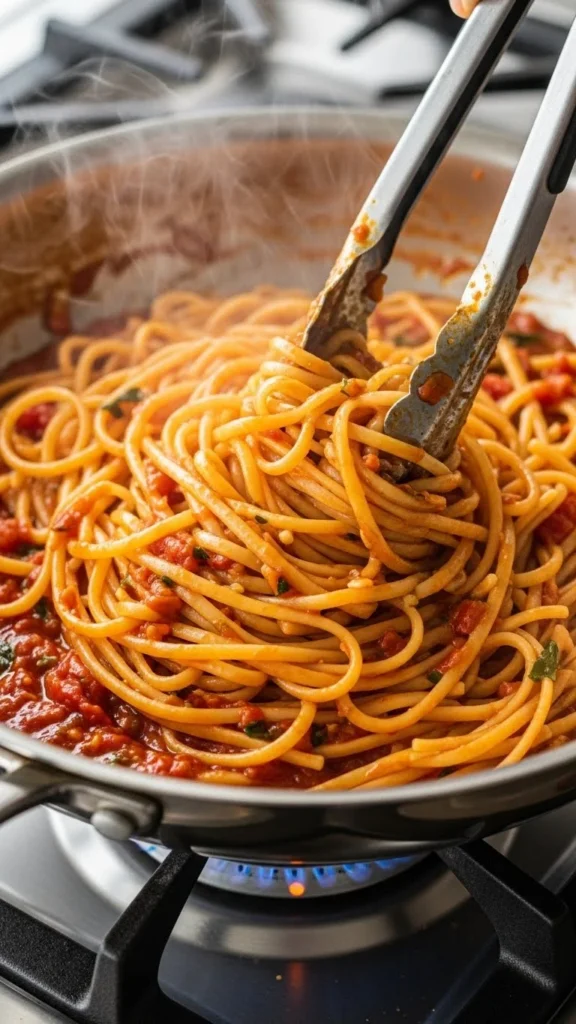
Finish Pasta in the Sauce for Best Flavor
This step is what separates average pasta from amazing pasta.
- Add drained pasta directly to warm sauce
- Toss gently over low heat for 1–2 minutes
- Add splashes of pasta water as needed
This allows the pasta to absorb flavor and reach perfect doneness without overcooking.
Fresh vs Dried Pasta: Know the Difference
Not all pasta cooks the same.
Dried Pasta
- Made from semolina flour
- Takes 8–12 minutes
- Best for hearty sauces
Fresh Pasta
- Cooks in 2–4 minutes
- Softer texture
- Watch closely to avoid overcooking
Fresh pasta can go from perfect to overdone very quickly, so stay nearby.
Common Pasta Mistakes to Avoid
Keep these in mind every time you cook pasta:
- Using a pot that’s too small
- Under-salting the water
- Overcooking “just to be safe”
- Draining too early or too late
- Skipping the sauce-finishing step
Avoiding these alone will drastically improve your results.
Final Takeaway
Cooking pasta the right way isn’t complicated, but it does require attention. Plenty of water, generous salt, careful timing, and finishing in the sauce are the keys to pasta that’s perfectly al dente and full of flavor.
Save this guide for later, pin it to your cooking board, and the next time pasta night rolls around, you’ll know exactly what to do 🍝✨
Leave a Reply