Greasy pans have a way of ruining the mood after a good meal. You cooked, you ate, you relaxed… and now you’re staring at a pan coated in stubborn oil and burnt-on mess. Scrubbing for ages feels unfair—and honestly, unnecessary. The good news? You can get pans clean with way less effort if you use the right approach.
This guide walks you through simple, beginner-friendly methods that break down grease fast, without wrecking your arms or your cookware.
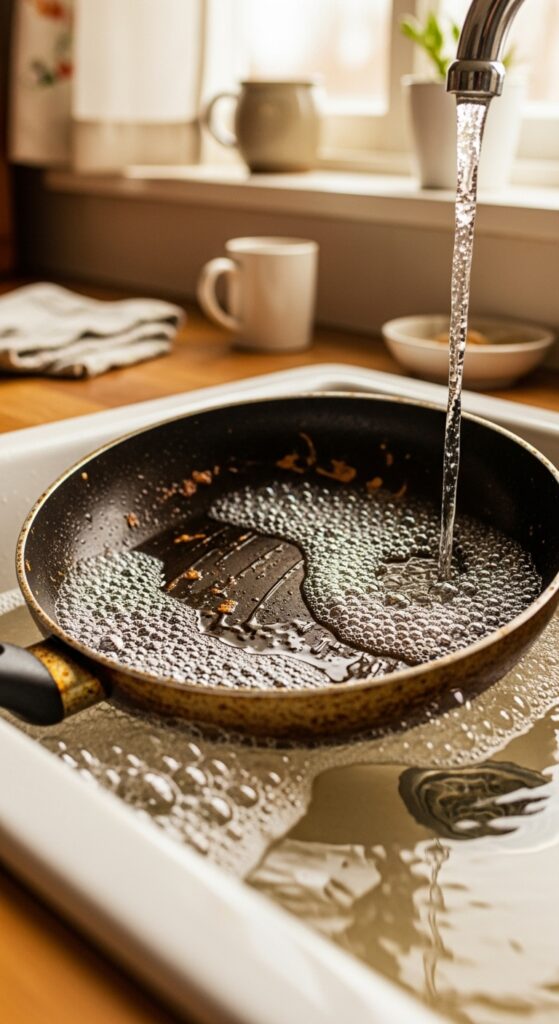
Why Grease Is So Hard to Remove
Grease sticks because oil bonds to hot metal. Once it cools, it hardens and traps food particles. Scrubbing alone often just spreads it around.
What actually works better is:
- Heat to loosen grease
- Acids or alkalines to break it down
- Time to let ingredients do the work
When you combine these, grease practically wipes away.
Step 1: The Boiling Water + Dish Soap Method
This is the fastest fix for everyday greasy pans.
What you’ll need:
- Dish soap
- Hot water
- Stove
How to do it:
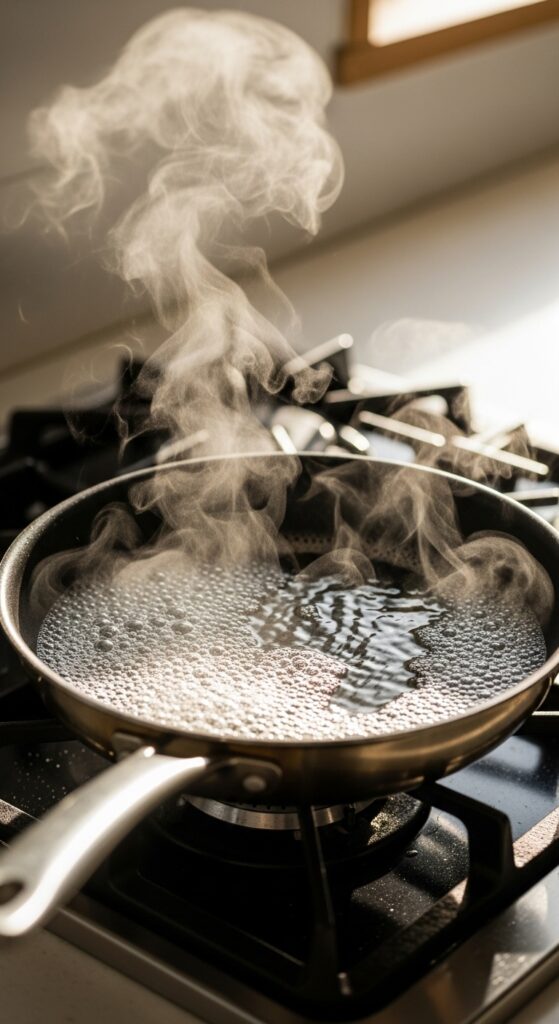
- Put the pan back on the stove.
- Add enough water to cover the greasy area.
- Add a few drops of dish soap.
- Bring the water to a gentle boil for 5–10 minutes.
- Turn off the heat and let it cool slightly.
- Pour out the water and wipe clean with a sponge.
The heat melts the grease, and the soap lifts it away. Most residue will slide right off—no scrubbing marathon needed.
Step 2: Baking Soda Paste for Stubborn Buildup
For grease that laughs at soap alone, baking soda is your best friend.
What you’ll need:
- Baking soda
- A little water
- Soft sponge or cloth
How to do it:
- Sprinkle baking soda generously over the greasy areas.
- Add a few drops of water to make a thick paste.
- Let it sit for 20–30 minutes.
- Wipe away with a damp sponge.
Baking soda breaks down grease without scratching, making it perfect for stainless steel and nonstick pans.
Tip: For extra power, use hot water when wiping it away.
Step 3: Vinegar Steam for Burnt-On Grease
This method works especially well for pans with baked-on oil or dark stains.
What you’ll need:
- White vinegar
- Water
How to do it:
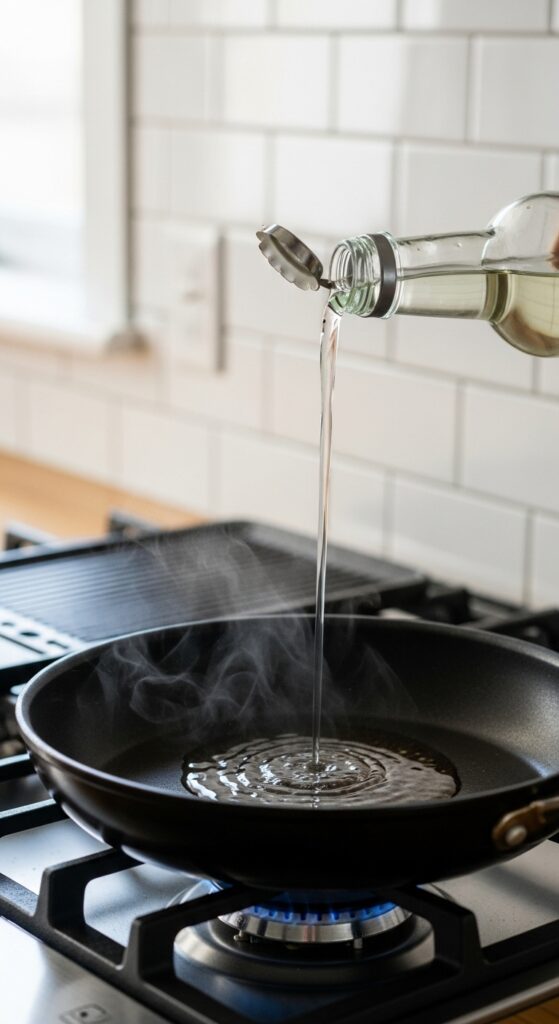
- Pour equal parts vinegar and water into the pan.
- Heat until steaming (not boiling).
- Let it steam for 5 minutes.
- Turn off heat and allow it to cool.
- Wipe clean with a sponge.
The steam loosens the grease while vinegar dissolves residue underneath.
Step 4: Overnight Soak (The Zero-Effort Option)
If you really don’t want to deal with it now, soaking works wonders.
Best soak options:
- Hot water + dish soap
- Hot water + baking soda
- Hot water + dishwasher tablet
How to do it:
- Fill the pan with hot water.
- Add your chosen cleaner.
- Let it soak overnight.
- Rinse and lightly wipe in the morning.
Most grease will loosen enough to rinse away completely.
Common Mistakes to Avoid
Cleaning greasy pans doesn’t have to be hard—but these mistakes make it worse:
- Using steel wool on nonstick pans
- Scrubbing before soaking
- Letting grease cool and harden without soaking
- Using too little cleaner
Let time and chemistry do the work first.
Pro Tips for Easier Cleanup Next Time
Prevention saves more time than any cleaning trick.
- Wipe pans while they’re still warm
- Deglaze after cooking by adding warm water immediately
- Use a splatter screen to reduce oil buildup
- Avoid overheating oil in the first place
Small habits make greasy pans way easier to manage.
Final Touches: When Your Pan Looks Brand New Again
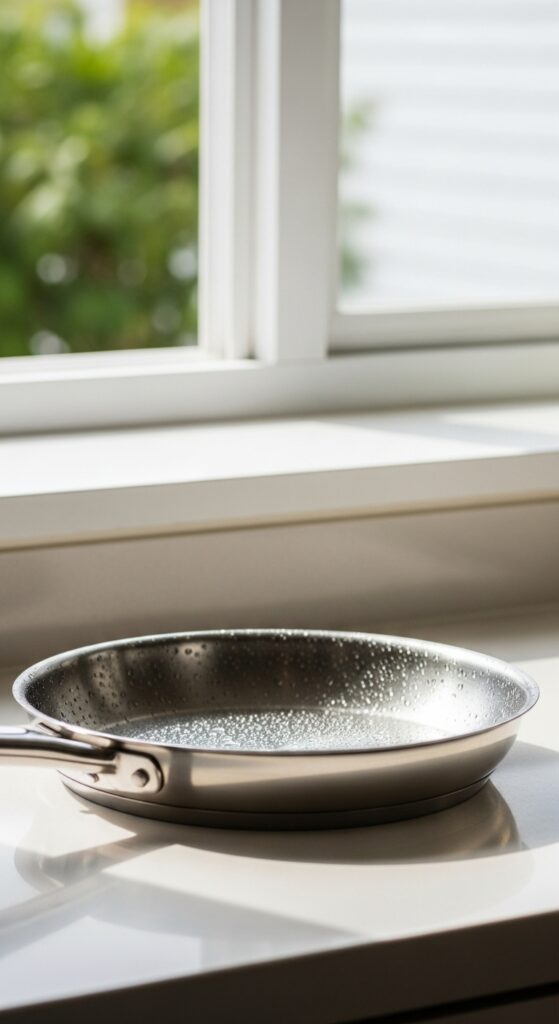
Once your pan is clean:
- Rinse thoroughly
- Dry immediately to prevent water spots
- Store once fully dry
The Takeaway
You don’t need endless scrubbing to clean greasy pans. Heat, soaking, and simple pantry ingredients do the heavy lifting for you. Try one of these methods today and give your arms a break.
Save this for later, or pin it for your next kitchen cleanup.
Leave a Reply