If you’ve ever guessed at portions and wondered why gains stall, you’re not alone. Learning how to calculate protein intake for your fitness goals gives you clarity, helps you recover faster, and makes meal prep painless. You’ll stop over- or under-eating protein and start seeing steady progress.
Get started with a reliable tool like a digital kitchen scale and a handy protein shaker bottle for on-the-go shakes. These two items cut guesswork and speed up tracking.
This guide walks you step-by-step through how to calculate protein intake for your fitness goals. You’ll learn baseline formulas, tweak numbers for fat loss or muscle gain, translate grams into meals, and track progress with simple tools.
Calculate Your Baseline Protein Needs
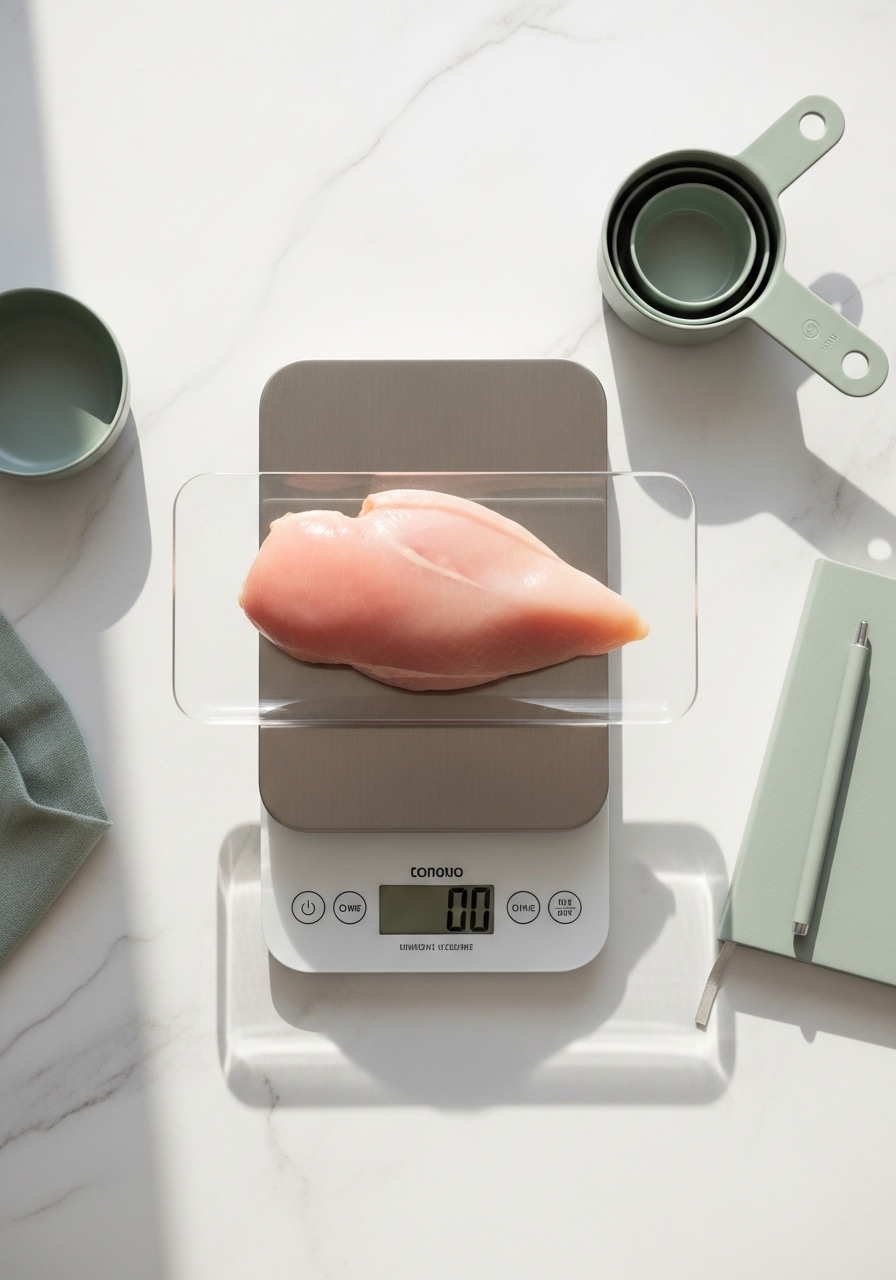
Start with a simple baseline: use 0.8–1.0 g per kg of body weight if you’re mostly active but not training hard. For strength training or muscle gain, a common range is 1.6–2.2 g per kg. If you prefer pounds, that’s roughly 0.36–1.0 g per lb for different goals.
Steps:
- Weigh yourself in kilograms (or convert pounds to kg: lb ÷ 2.2).
- Multiply by the range that matches your activity level.
- Record the result as your daily protein target in grams.
Tip: Measure portions with a food scale rather than eyeballing. A kitchen scale removes the biggest source of error.
Factor in Your Fitness Goals
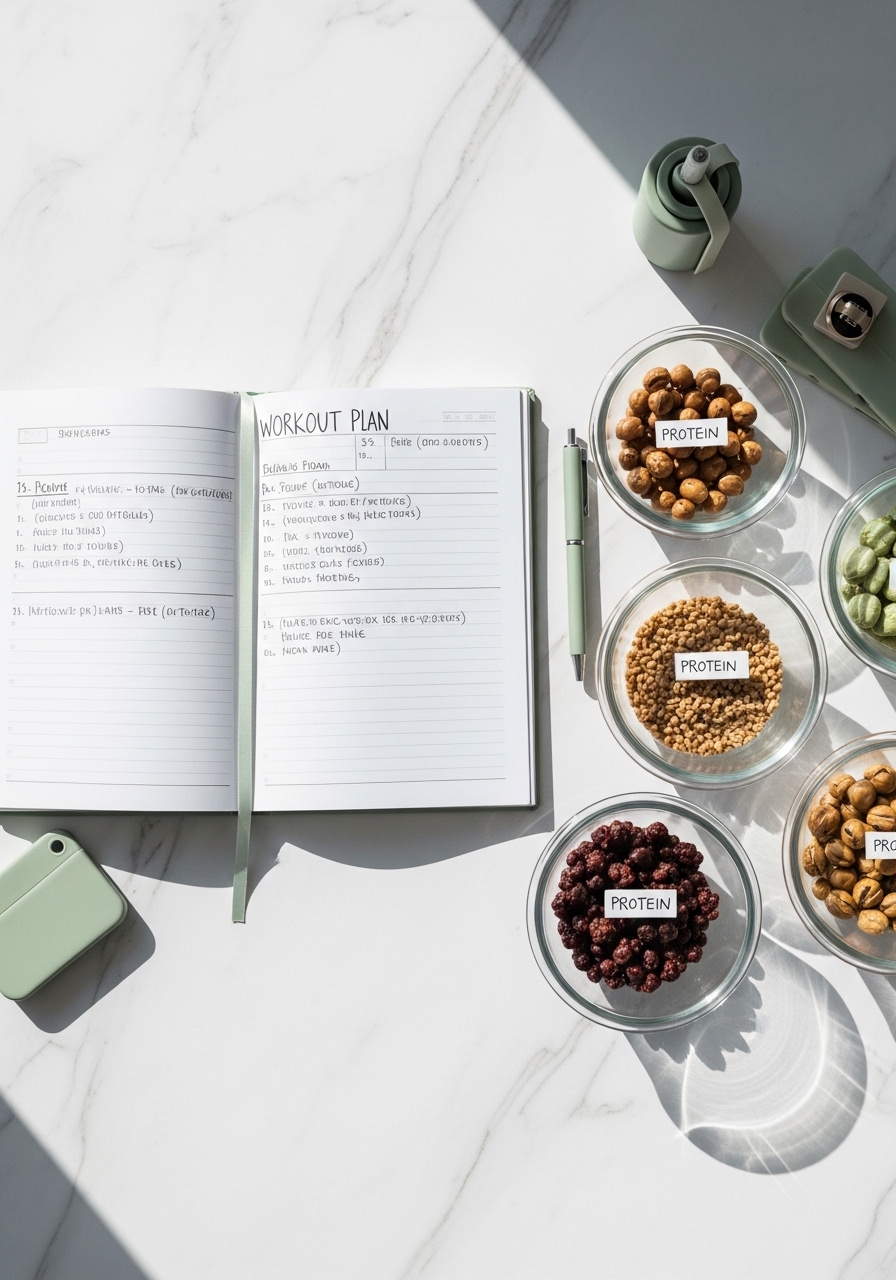
Your goal shifts your target. For fat loss, keep protein at the higher end of the range to preserve muscle. For steady maintenance, aim mid-range. For aggressive muscle gain, target the top of the range.
Practical adjustments:
- Fat loss: add +10–20% to your maintenance protein target.
- Muscle gain: pick 1.8–2.2 g/kg and ensure a slight calorie surplus.
Make prep easier with accurate measuring tools like measuring cups and measuring spoons for sauces and powders. They speed up portioning and keep meals consistent.
Translate Grams to Meals and Portions
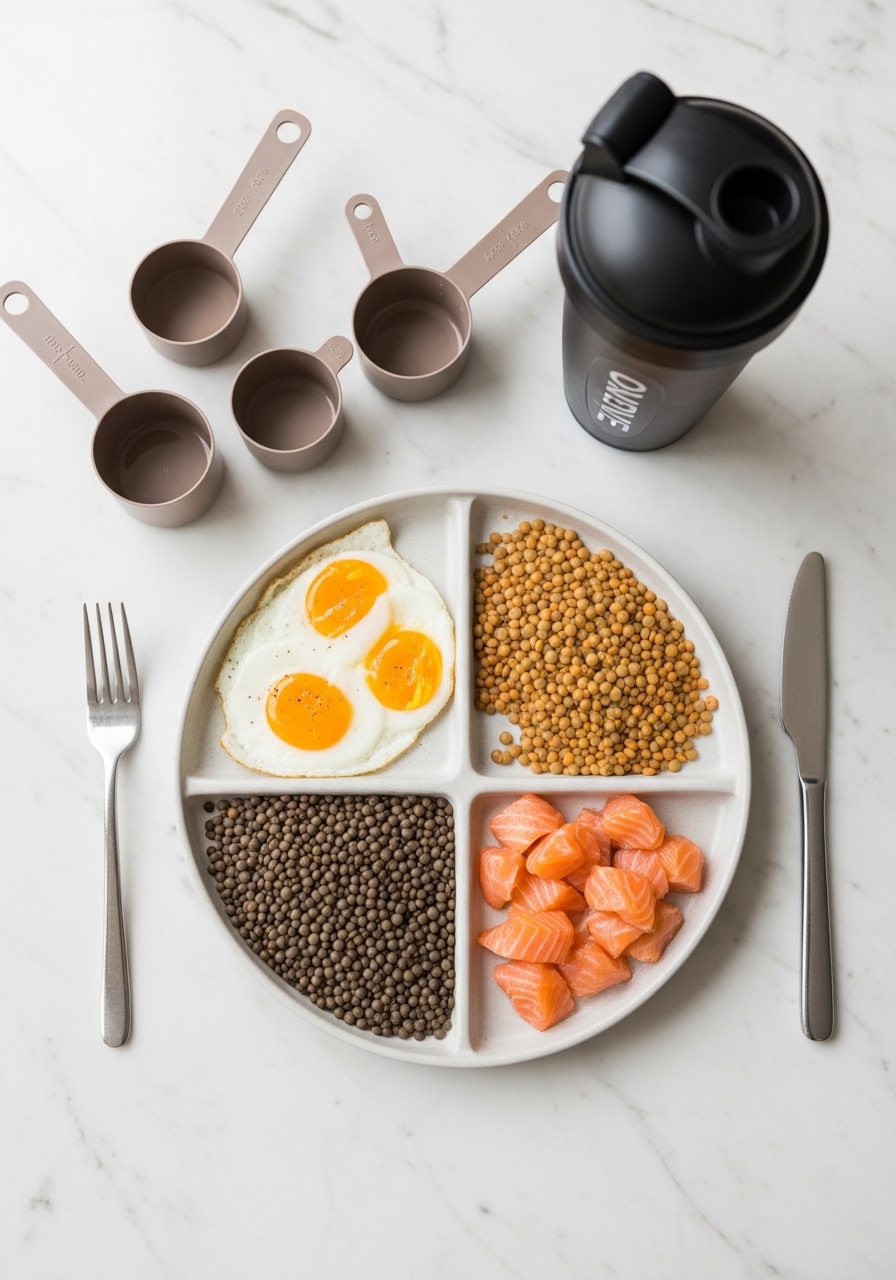
Once you have a daily gram goal, split it across meals. A useful pattern is 3–5 meals with 20–40 g per serving, depending on your total.
Quick method:
- Divide daily grams by number of meals.
- Use the digital kitchen scale to weigh protein sources: 100 g chicken = ~31 g protein, 1 large egg = ~6 g, 1 cup Greek yogurt = ~17 g.
- Make quick shakes when needed with a blender or your shaker bottle to hit targets after workouts.
Pro tip: Prepare portioned meals in glass meal prep bowls so each container already matches a meal’s protein target.
Track, Adjust, and Troubleshoot
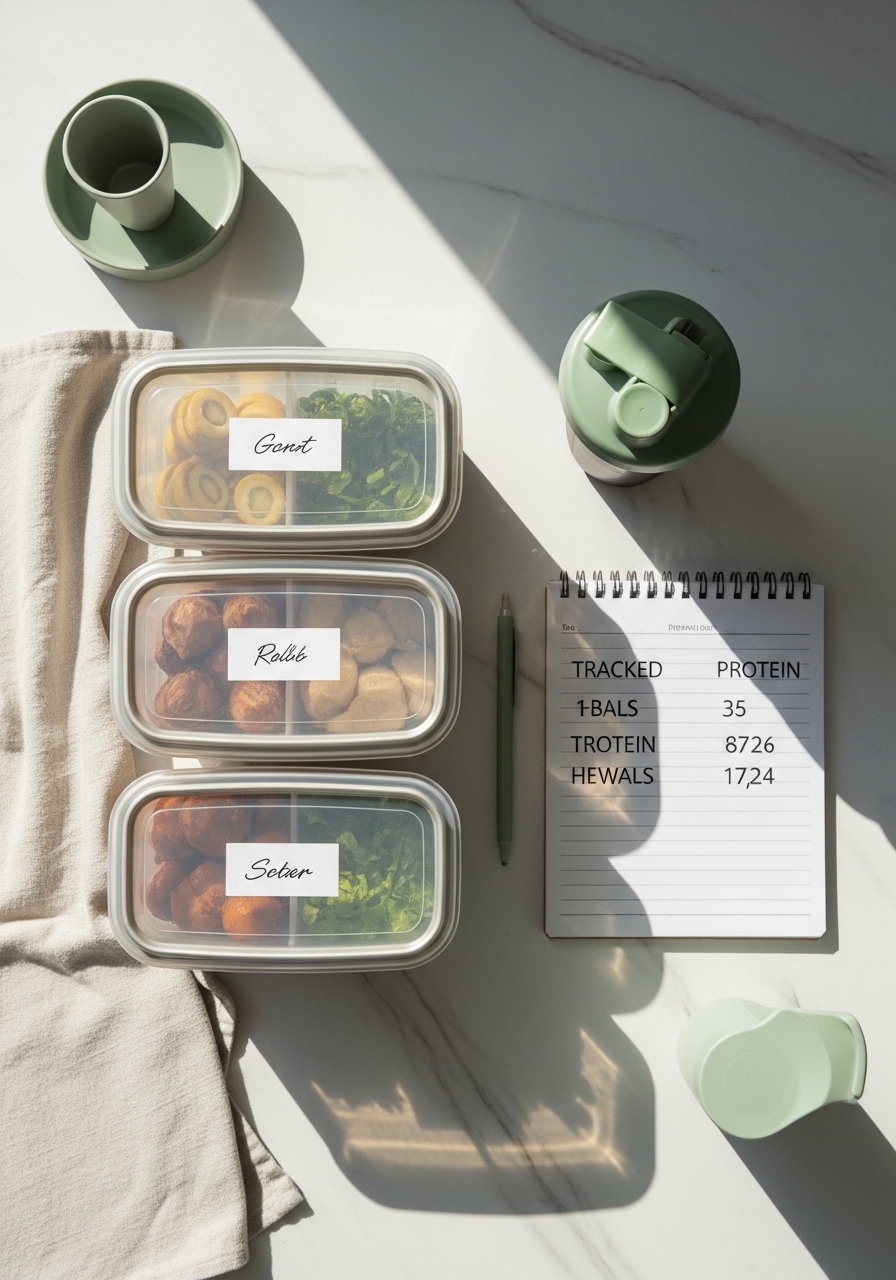
Monitor progress for 2–4 weeks and adjust if energy or recovery lags. If you’re losing muscle during a cut, raise protein by 10–15%. If you’re gaining excess fat, keep protein stable and reduce calories elsewhere.
Tips and fixes:
- Log meals with a tracking app and confirm portions with a food scale.
- Store leftovers in airtight containers or glass storage containers for quick reheating.
- If you cook large batches, use a blender for protein smoothies to finish gaps during the day.
- For cooked meats, check doneness quickly with an instant-read thermometer so portions aren’t overcooked or undercounted.
You’ll likely tweak targets as you change workouts or body composition. Small adjustments keep results consistent.
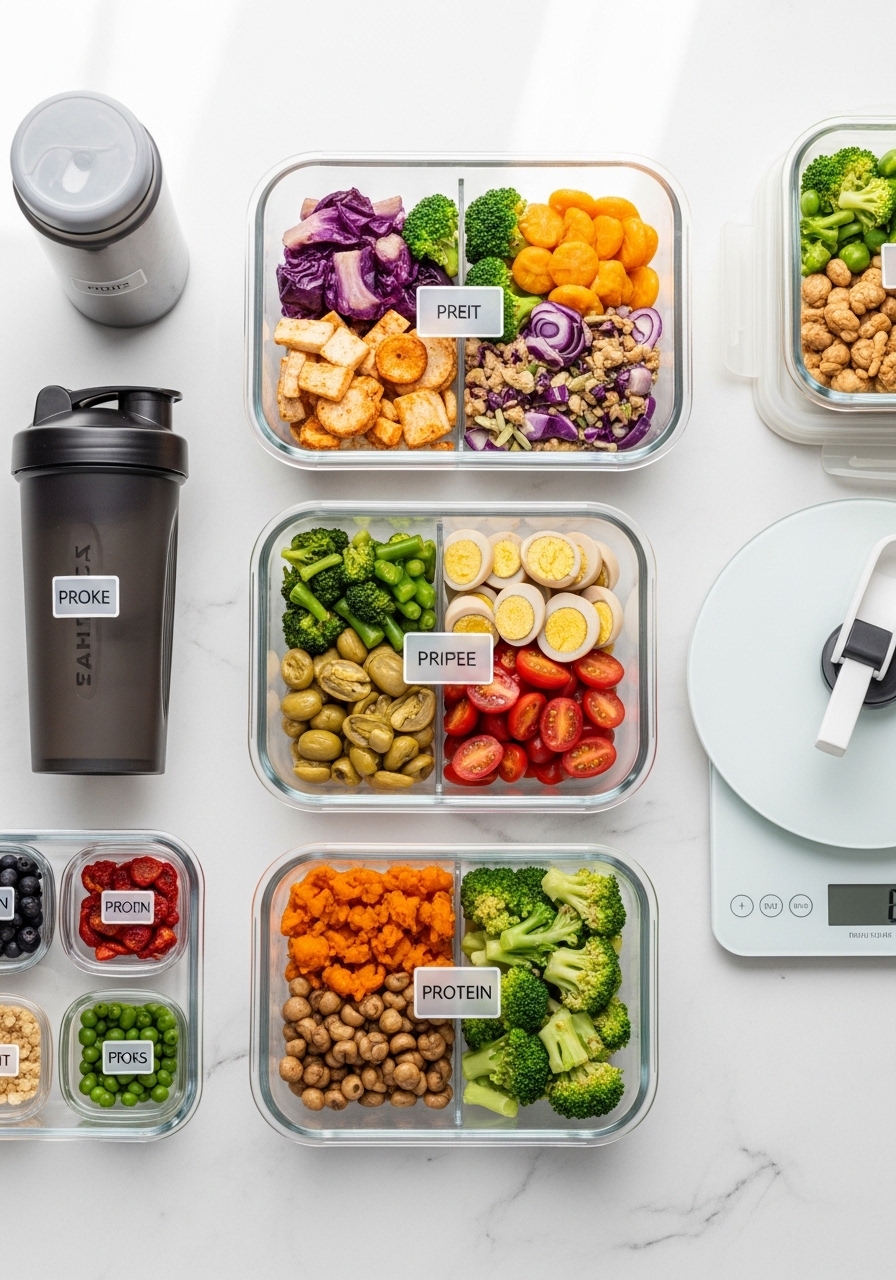
You’ve now got a repeatable method for how to calculate protein intake for your fitness goals and turn numbers into meals. Save this guide, measure a few portions with a digital kitchen scale, and prep a week of food in glass meal prep bowls. Which protein target will you try this week? Pin this guide and share it with a friend who tracks macros.
Leave a Reply