Cooking a whole turkey can feel… intimidating.
It’s big. It’s expensive. And everyone is watching.
But here’s the truth: roasting a Thanksgiving turkey doesn’t have to be overwhelming. You don’t need complicated techniques or culinary school skills. You just need a simple plan.
Once you break it into manageable steps, it becomes surprisingly doable — and even enjoyable.
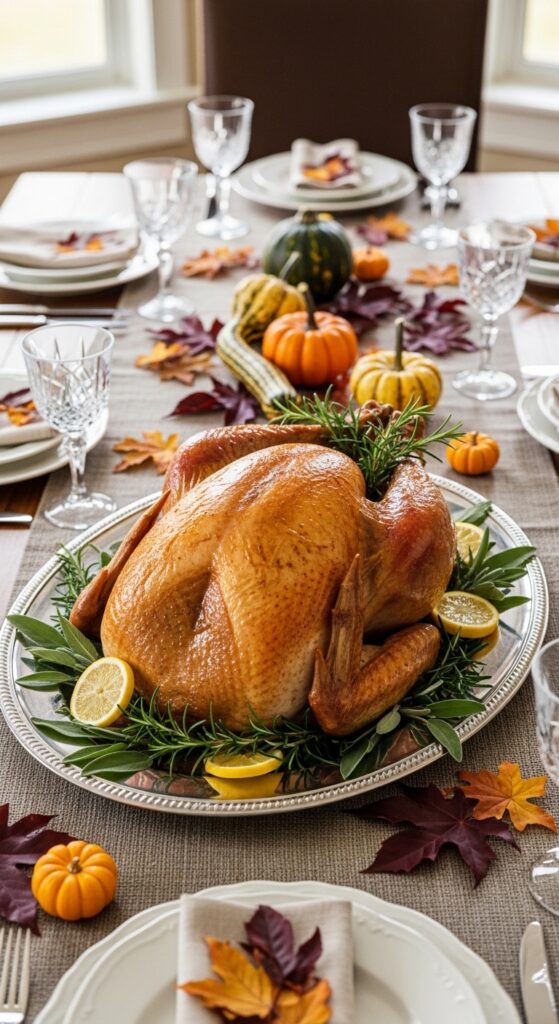
Let’s walk through it calmly and step-by-step.
Step 1: Plan Ahead (This Removes 80% of the Stress)
The biggest Thanksgiving mistakes happen before the oven even turns on.
Thaw Early
If using a frozen turkey:
- Allow 24 hours per 4–5 pounds in the refrigerator.
- Keep it on a tray to catch any liquid.
- Never thaw at room temperature.
Example:
A 16-pound turkey needs about 3–4 days in the fridge.
Check Your Tools
You’ll need:
- Roasting pan
- Meat thermometer (non-negotiable)
- Aluminum foil
- Sharp knife
- Cutting board
Knowing you’re prepared instantly lowers stress.
Step 2: Keep the Seasoning Simple
You do not need a complicated brine or 15 spices.
Simple works beautifully.
Pat the turkey dry with paper towels. Then:
- Rub softened butter all over the skin.
- Season generously with salt.
- Add black pepper.
- Place halved lemons, onion, and fresh herbs inside the cavity.
That’s it.
Butter helps with browning. Salt enhances flavor. Aromatics add subtle depth without effort.
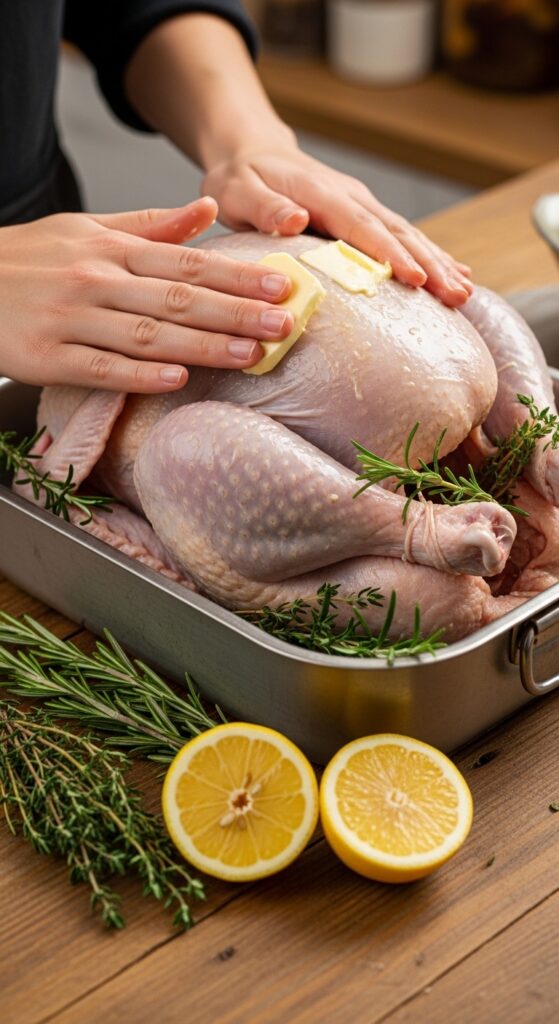
Keep it simple. Let the turkey shine.
Step 3: Use the Right Temperature
Forget guessing.
Roast at 325°F (165°C)
This steady temperature cooks evenly without drying the bird.
General guideline:
- 13–15 minutes per pound
But time is only a guide. Temperature is what matters.
Step 4: Use a Meat Thermometer (Your Best Friend)
This is how you eliminate stress completely.
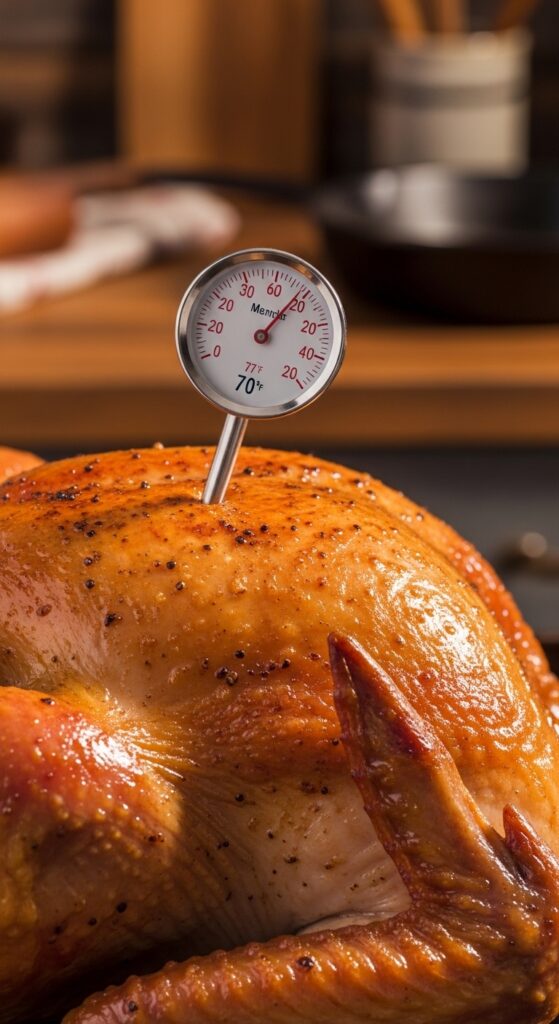
Insert the thermometer into the thickest part of the thigh, without touching bone.
The turkey is done when it reaches:
- 165°F (74°C)
Once it hits 165°F, take it out. Even if the timer hasn’t gone off yet.
No guessing.
No overcooking.
No panic.
Step 5: Don’t Over-Baste
You don’t need to baste every 20 minutes.
In fact, opening the oven constantly:
- Drops the temperature
- Slows cooking
- Adds stress
If you want to baste, do it once or twice near the end. Otherwise, leave it alone and let the oven do the work.
Step 6: Tent With Foil If Needed
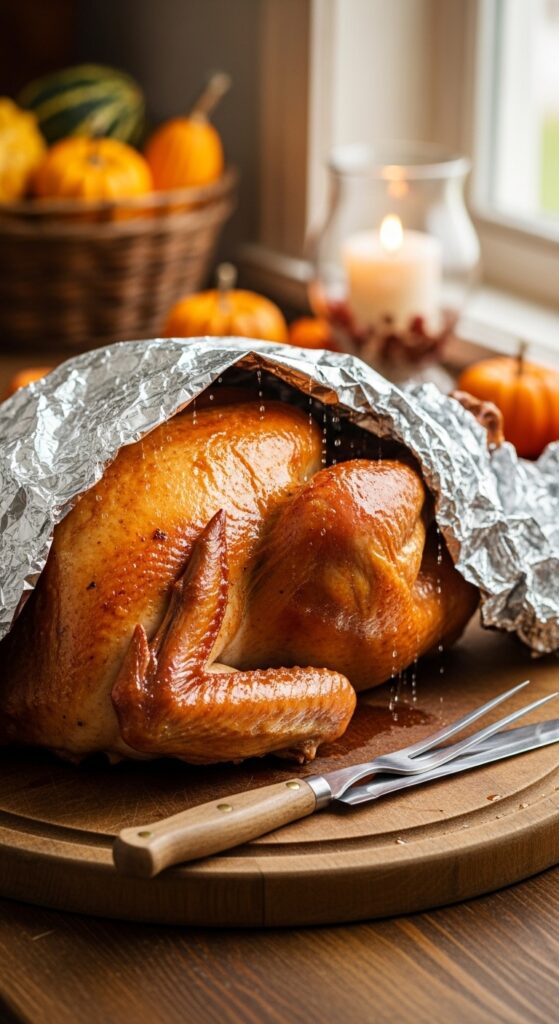
If the skin starts browning too quickly:
- Loosely cover the top with foil.
- Keep roasting until the internal temperature reaches 165°F.
This prevents burning while allowing the inside to cook through.
Simple fix. No panic required.
Step 7: Let It Rest (Very Important)
This step is often skipped — and it makes a huge difference.
Once out of the oven:
- Let the turkey rest 20–30 minutes.
- Do not carve immediately.
Resting allows juices to redistribute, so the meat stays moist instead of dry.
Use this time to:
- Reheat side dishes
- Make gravy
- Set the table
- Take a breath
You’ve earned it.
Common Turkey Mistakes to Avoid
Here’s what causes most holiday stress:
- ❌ Not thawing early enough
- ❌ Forgetting to remove giblets
- ❌ Skipping the thermometer
- ❌ Overcooking “just to be safe”
- ❌ Carving too soon
If you avoid these, you’re already ahead of the game.
Stress-Free Carving Tips
Carving doesn’t have to be fancy.
- Remove the legs first.
- Slice along one side of the breastbone.
- Cut breast meat into even slices.
- Arrange everything neatly on a platter.
No one expects perfection. They just want delicious turkey.
Why This Simple Method Works
- Butter creates golden, crisp skin.
- Salt brings out natural flavor.
- 325°F cooks evenly.
- A thermometer removes uncertainty.
- Resting locks in moisture.
No complicated brining.
No flipping.
No last-minute scrambling.
Just a straightforward, reliable approach.
Final Encouragement
Cooking Thanksgiving turkey isn’t about perfection.
It’s about gathering people, creating warmth, and sharing a meal you made with care.
Keep it simple.
Trust your thermometer.
Give yourself plenty of time.
You’ve got this.
Save this guide for Thanksgiving — and enjoy a calm, confident holiday kitchen.
Leave a Reply