Ever made a delicious meal that somehow looks… underwhelming on the plate? You’re not alone. The good news is that beautiful plating isn’t about expensive tweezers or restaurant-only tricks. It’s about simple choices, a little intention, and using what you already have in your kitchen.
With a few easy techniques, you can turn everyday meals into plates that look polished, inviting, and totally photo-worthy.
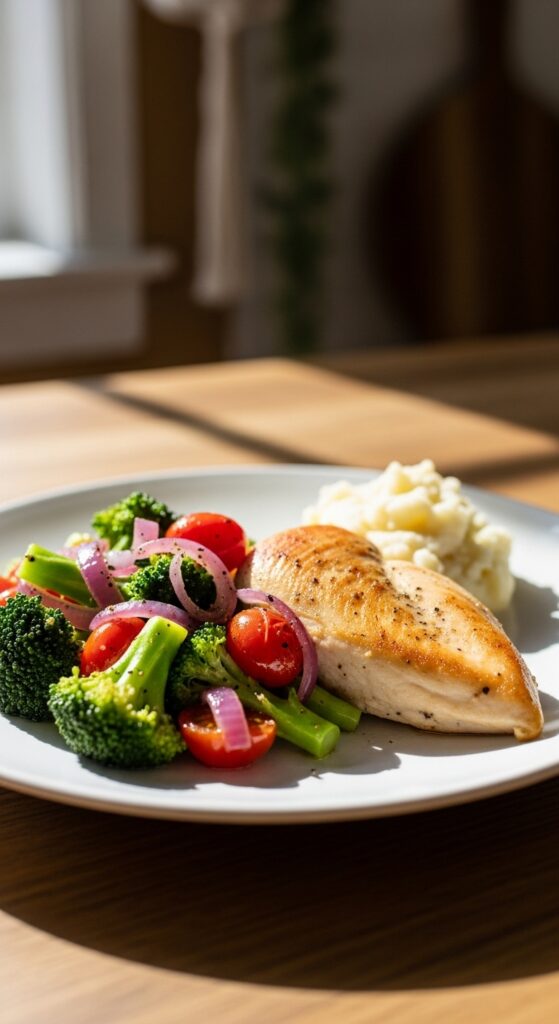
Start With a Clean, Simple Plate
The plate is your canvas, and simpler is better.
You don’t need designer dishware. A plain plate lets the food stand out and instantly makes everything look more intentional.
Keep this in mind:
- White or neutral plates show colors best
- Avoid overly busy patterns
- Choose plates that aren’t too large (extra space can make food look sparse)
Before adding food, quickly wipe the plate with a clean towel. Even tiny smudges can distract from an otherwise beautiful presentation.
Build a Base Instead of Spreading Everything Out
One of the biggest beginner mistakes is spreading food across the plate. Instead, think in layers.
Start with a base:
- A scoop of rice
- Mashed potatoes
- Pasta
- Greens or grains
Place the base slightly off-center. Then layer your main item on top. This creates height and makes the plate feel more dynamic.
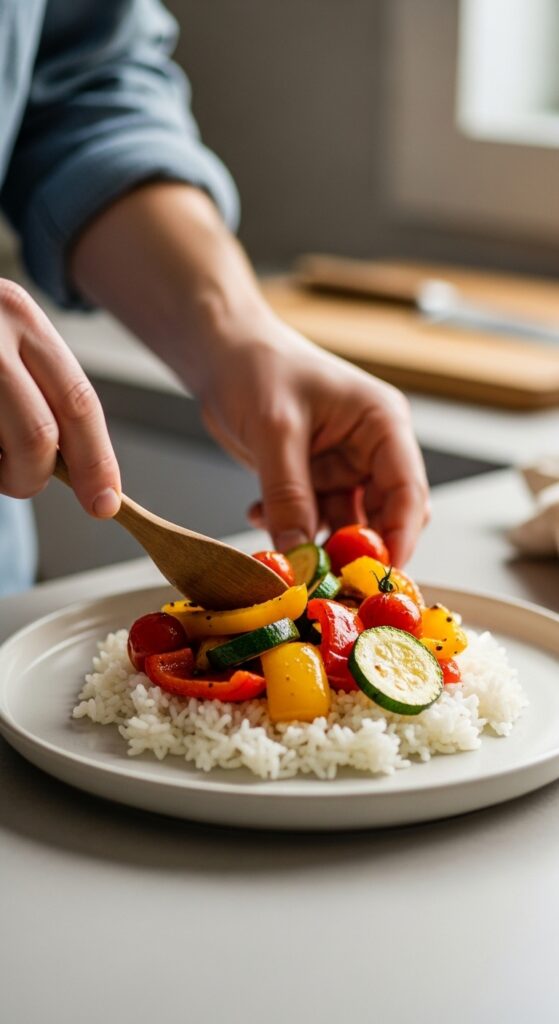
Use Height to Make Food Look Restaurant-Worthy
Flat food often looks boring, even when it tastes amazing. Height adds drama and interest—and it’s easy to create.
Try these simple tricks:
- Stack sliced protein slightly overlapping
- Lean vegetables against the main dish
- Pile ingredients instead of spreading them flat
You don’t need precision. Just aim for a gentle mound rather than a pancake.
Let Color Do the Heavy Lifting
Color is one of the fastest ways to make food look beautiful.
Before plating, pause and ask: Does this plate have contrast?
If everything is beige or brown, add one pop:
- Fresh herbs
- A bright vegetable
- A drizzle of sauce
- A lemon wedge
Even a small touch of green or red can completely transform the plate.
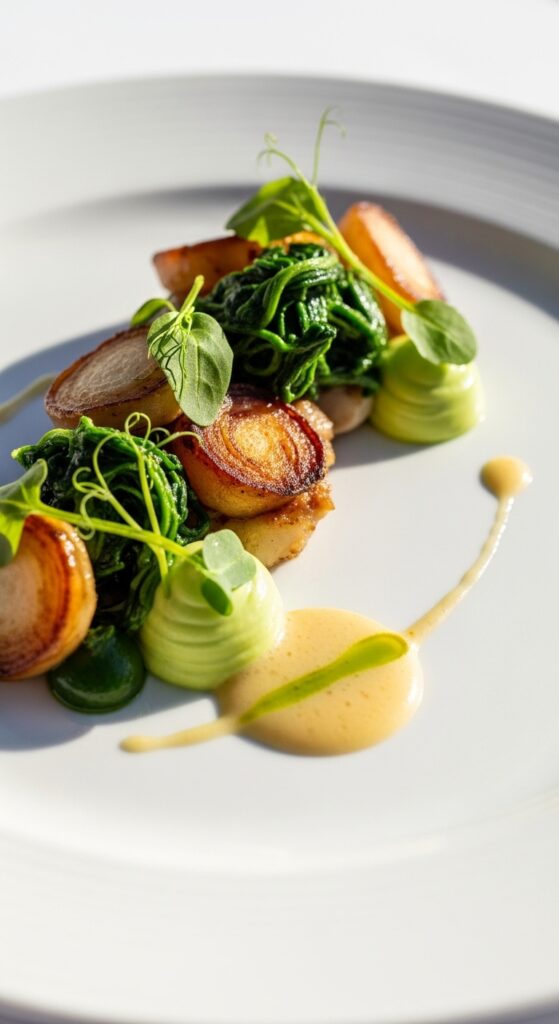
Sauce With Intention (No Squeezing Bottles Needed)
Sauce can elevate a dish or ruin it if overdone. You don’t need fancy tools—just a spoon.
Easy sauce techniques:
- Spoon a small pool and place food on top
- Drizzle lightly by tapping the spoon
- Add sauce to one side instead of covering everything
Less is more. You want the sauce to complement the food, not drown it.
Garnish Only With What You’d Actually Eat
Garnish should never feel random.
Skip anything that doesn’t belong to the dish. Instead, use ingredients already in the recipe.
Great no-fuss garnishes:
- Chopped herbs
- Cracked pepper
- Citrus zest
- A drizzle of olive oil
Sprinkle lightly and stop early. Over-garnishing is one of the most common plating mistakes.
Mind the Negative Space
Negative space is the empty area around the food—and it matters more than you think.
Leaving space:
- Makes food look intentional
- Keeps plates from feeling crowded
- Helps each element stand out
You don’t need to fill the plate edge to edge. A little breathing room makes everything feel cleaner and more elevated.
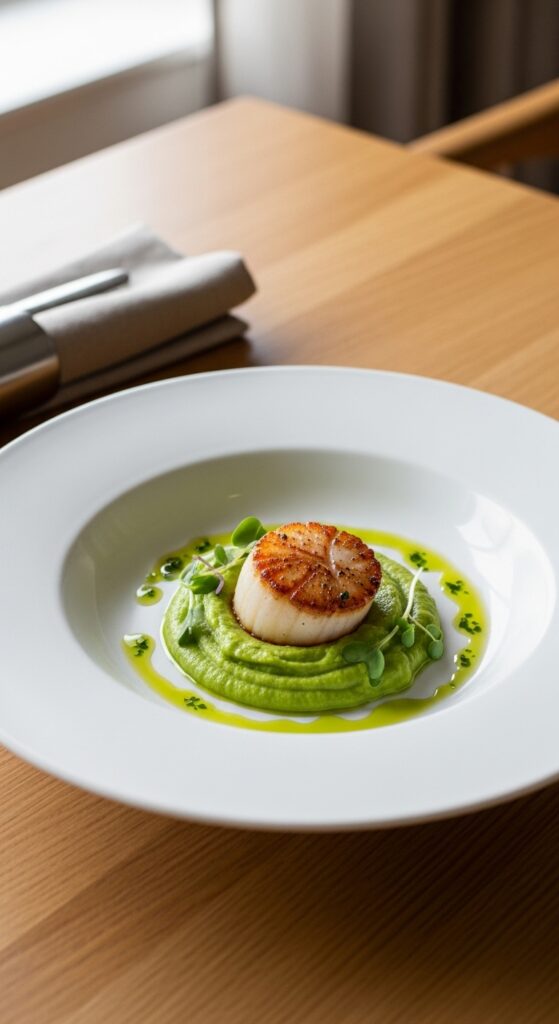
Common Plating Mistakes to Avoid
Even small changes can make a big difference. Try to avoid these pitfalls:
- Overfilling the plate
- Mixing too many textures in one spot
- Smearing sauces randomly
- Forgetting to wipe plate edges
- Adding garnish as an afterthought
When in doubt, simplify. Fewer elements almost always look better.
Final Touches That Pull Everything Together
Before serving, take a quick step back and look at the plate like it’s someone else’s meal.
Ask yourself:
- Does it look balanced?
- Is there color contrast?
- Is the plate clean?
Sometimes adjusting one piece or removing one element is all it takes.
Beautiful plating isn’t about perfection—it’s about care. And once you start paying attention to these small details, your food will naturally look better every time.
Save this for later, and try one of these tips at your next meal. 🍽️
Leave a Reply