Thanksgiving turkey has a reputation for causing kitchen chaos: dry meat, last-minute panic, and a clock ticking louder than the oven timer. But here’s the truth—cooking a beautiful, juicy turkey doesn’t have to be stressful. With a simple plan and a few smart techniques, you can roast a turkey that looks impressive, tastes amazing, and lets you actually enjoy the holiday.
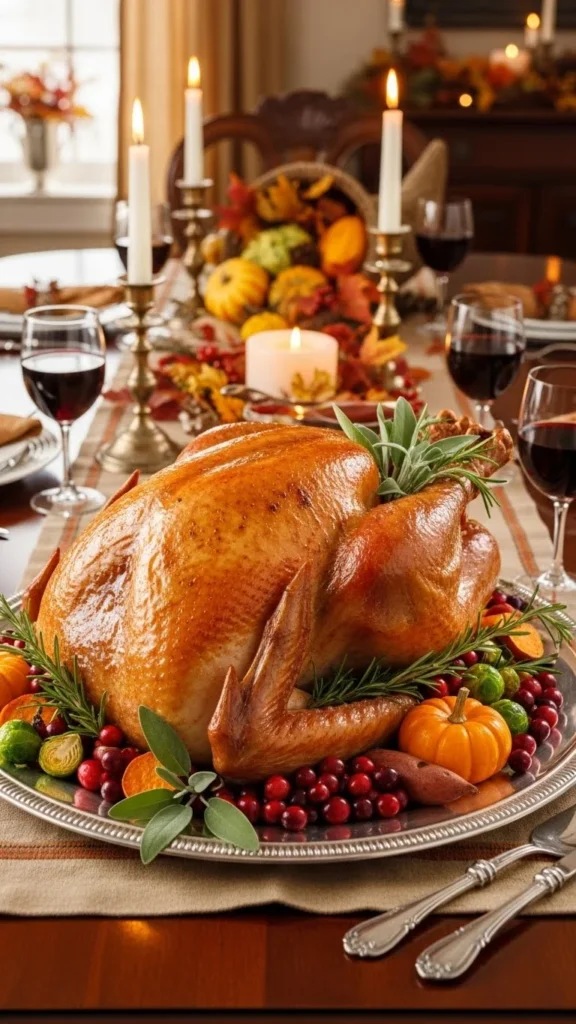
Let’s walk through the process step by step so you can cook your Thanksgiving turkey with confidence—and zero panic.
Start Early: Thawing and Planning Are Half the Battle
Stress-free turkey day begins days before Thanksgiving.
Thawing basics:
- Allow 24 hours of thawing per 4–5 pounds of turkey
- Thaw in the refrigerator, breast-side up, on a tray
- Never thaw on the counter
A frozen turkey on Thanksgiving morning is the fastest way to ruin your mood.
Plan ahead:
- Read the recipe completely
- Calculate cooking time
- Clear fridge space
- Prep ingredients the day before
When you plan early, Thanksgiving feels calm instead of chaotic.
Brining or Not Brining? Keep It Simple
Brining helps keep turkey juicy, but it doesn’t have to be complicated.
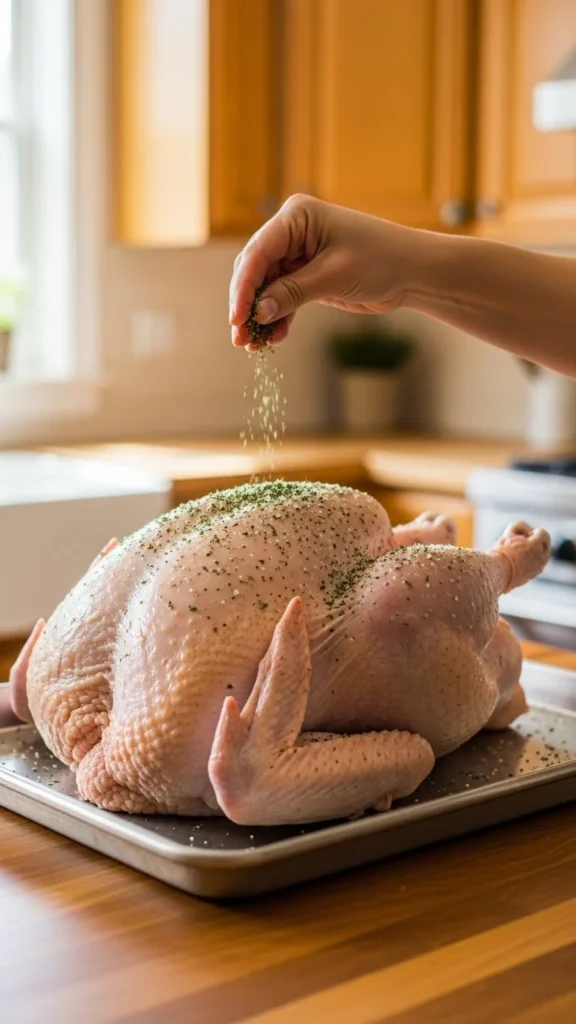
Easy dry brine (least stressful):
- Salt the turkey generously inside and out
- Add black pepper and herbs if desired
- Refrigerate uncovered for 12–24 hours
Dry brining seasons the meat deeply and helps crisp the skin—without dealing with buckets of liquid.
If brining feels overwhelming, skip it. You can still make a fantastic turkey with good roasting technique.
Set Up the Turkey for Even Cooking
Proper setup makes everything easier once the turkey goes in the oven.
Do this before roasting:
- Let turkey sit at room temperature for 30–45 minutes
- Pat the skin completely dry
- Tuck wing tips under the bird
- Tie legs loosely with kitchen twine (optional)
Flavor without stress:
- Rub butter or oil over the skin
- Add aromatics inside the cavity:
- Onion
- Garlic
- Lemon
- Fresh herbs
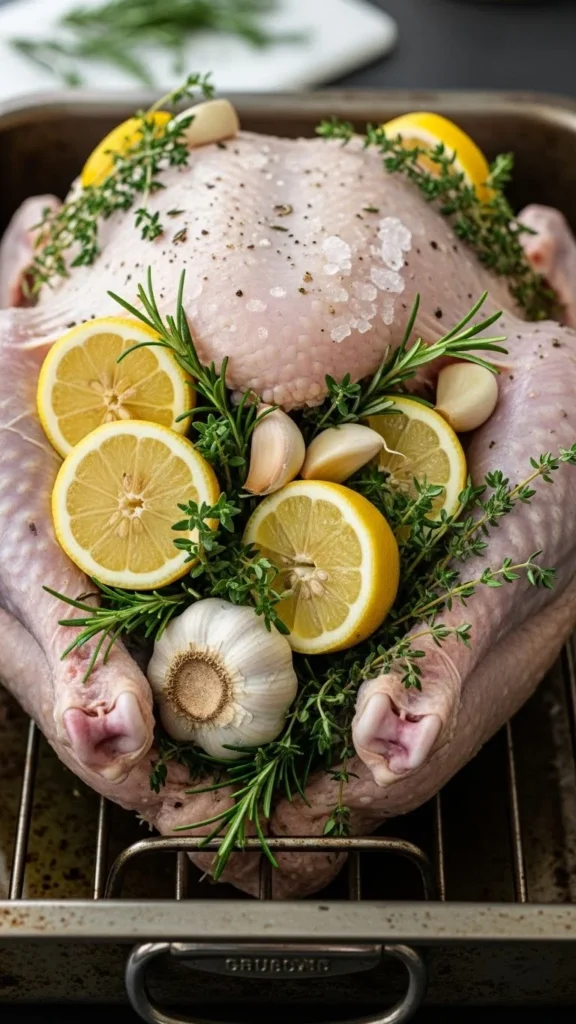
Skip stuffing the bird with bread—it complicates cooking times and adds stress.
Roast With Confidence (And Stop Basting!)
Constant basting is unnecessary and stressful.
Simple roasting method:
- Preheat oven to 325°F (165°C)
- Place turkey breast-side up on a rack
- Roast uncovered
Approximate cooking time:
- 13–15 minutes per pound
Cover loosely with foil if the skin browns too quickly.
Important:
Opening the oven repeatedly drops the temperature. Trust the process and keep the door closed.
Use a Thermometer (Your Best Stress-Relief Tool)
Guessing is stressful. A thermometer is not.
Safe internal temperatures:
- Breast: 165°F (74°C)
- Thigh: 175–180°F (79–82°C)
Insert the thermometer into the thickest part of the meat without touching bone.
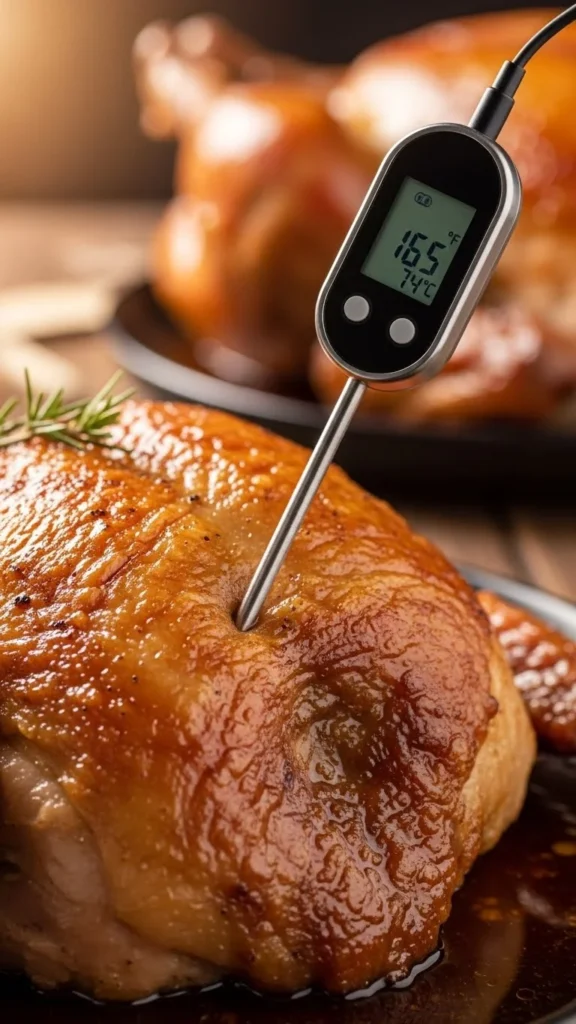
Once it hits temperature, your turkey is done—no guessing required.
Let the Turkey Rest (This Is Non-Negotiable)
Resting is where juicy magic happens.
Resting rules:
- Remove turkey from oven
- Tent loosely with foil
- Rest 30–45 minutes
This allows juices to redistribute and gives you time to finish sides, make gravy, and breathe.
Skipping rest leads to dry meat—no matter how well you cooked it.
Carve Calmly and Serve Proudly
Carving doesn’t need to be fancy.
Simple carving order:
- Remove legs and thighs
- Separate thighs from drumsticks
- Slice breast meat against the grain
- Arrange neatly on a platter
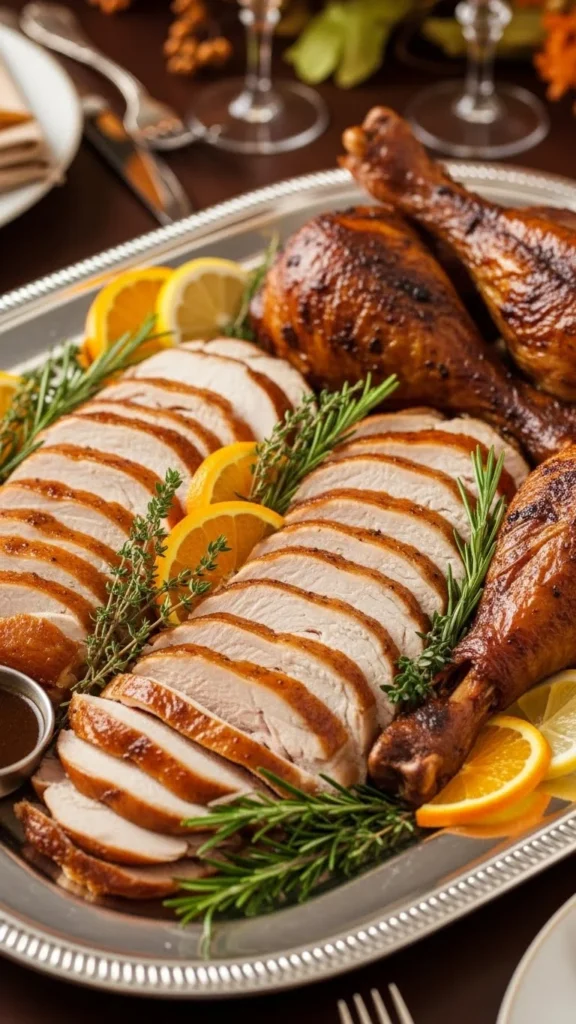
Warm gravy hides minor imperfections—another stress saver.
Common Turkey Mistakes to Avoid
Steer clear of these stress-inducing errors:
- Cooking a partially frozen turkey
- Skipping the thermometer
- Overcooking “just to be safe”
- Constant oven checking
- Cutting immediately after roasting
Calm cooking always beats rushed cooking.
Final Takeaway: A Calm Cook Makes a Better Turkey
A stress-free Thanksgiving turkey isn’t about perfection—it’s about preparation, patience, and trusting simple techniques. Start early, season well, use a thermometer, and let the bird rest. That’s it.
Your turkey will be golden, juicy, and worthy of the centerpiece spot—without stealing your holiday joy.
Save this guide for later and enjoy a calm, confident Thanksgiving cooking experience! 🦃🍂
Leave a Reply