There’s something magical about a plate of perfectly cooked spaghetti — not mushy, not raw, but al dente . That slight bite in the center? That’s the difference between *just pasta* and restaurant-quality pasta . 🍝
If your spaghetti often turns out too soft or sticks together, don’t worry — you’re not alone. Today, I’m breaking it down step by step** so you can cook spaghetti perfectly al dente every single time.
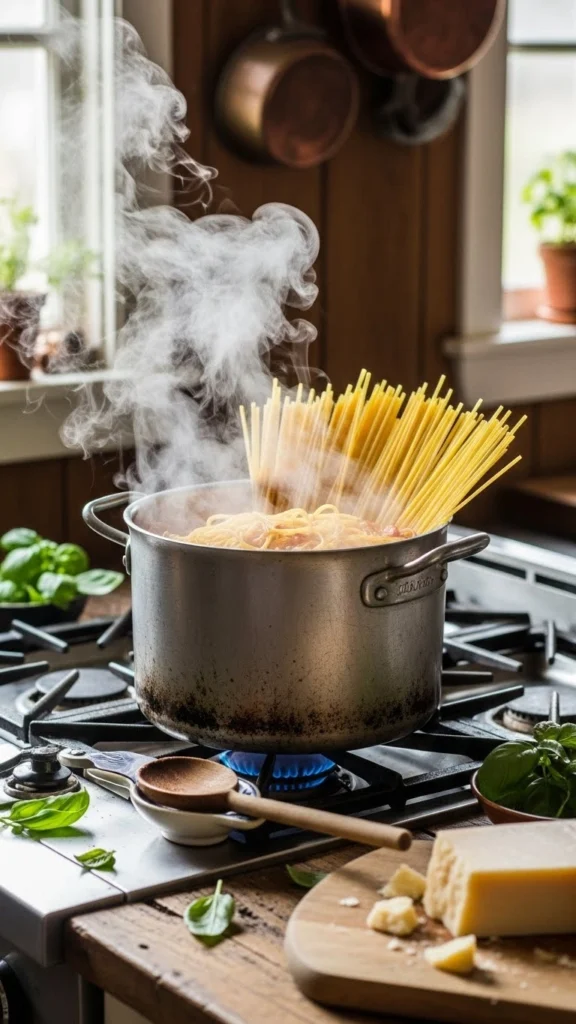
What Does “Al Dente” Actually Mean?
“Al dente” is an Italian term that literally means “to the tooth.”
In simple words:
– Pasta that’s tender but still firm
– No chalky raw center
– No soggy, overcooked strands
Why does it matter?
– Better texture
– Better flavor absorption
– Easier to digest
– Feels more authentic
Once you learn this method, you’ll never go back to guessing again.
Ingredients & Tools You’ll Need
You don’t need anything fancy — just the basics.
Ingredients:
– Dry spaghetti
– Water
– Salt (a generous amount)
Tools:
– Large pot
– Wooden spoon or tongs
– Timer
– Colander
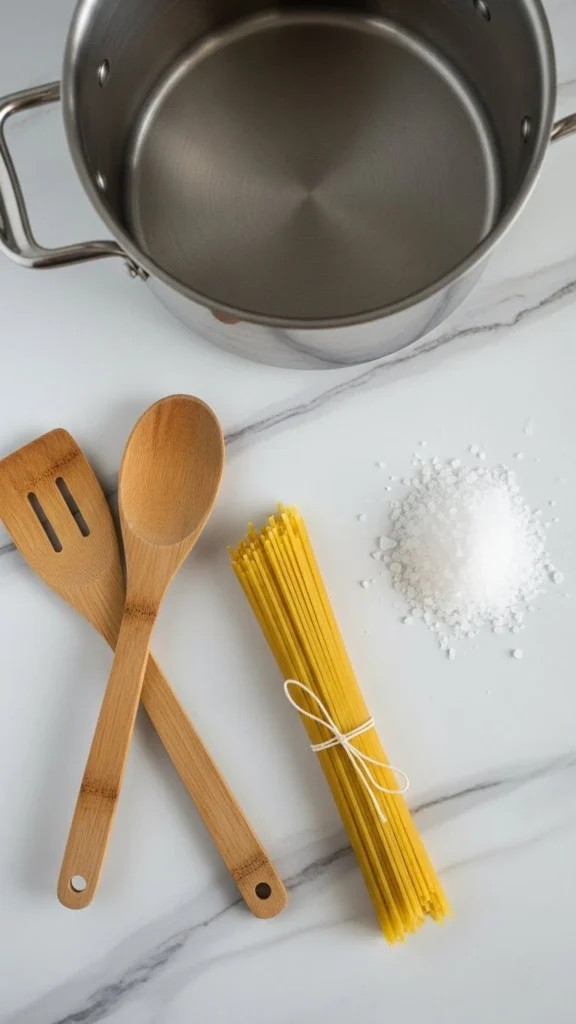
💡 Tip: A large pot is important. Crowded pasta sticks together and cooks unevenly.
Step 1: Use Plenty of Water (This Is Non-Negotiable)
The biggest mistake people make? Too little water.
Follow this rule:
– 4–5 liters of water for 500g spaghetti
Why so much water?
– Pasta needs space to move
– Prevents sticking
– Keeps temperature stable
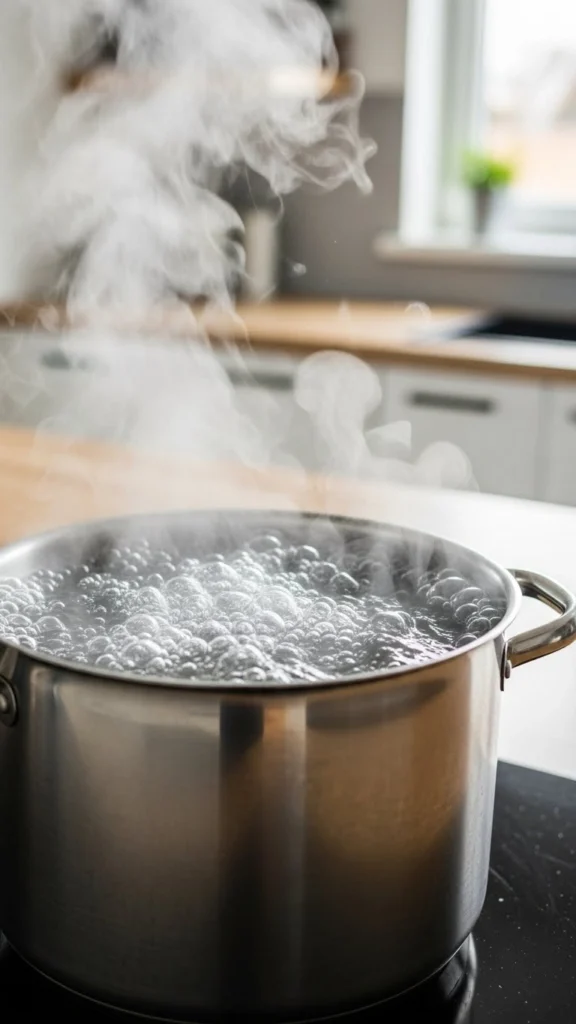
Bring the water to a rolling boil — not just small bubbles.
Step 2: Salt the Water Like the Sea
Once the water is boiling, add salt
– Use about 1–1½ tablespoons salt
– The water should taste slightly salty
❌ Do not add oil
Oil floats on top and does nothing for sticking — plus it prevents sauce from clinging later.
Remember:
👉 You’re seasoning the pasta from the inside.
Step 3: Add Spaghetti the Right Way
Now comes the fun part.
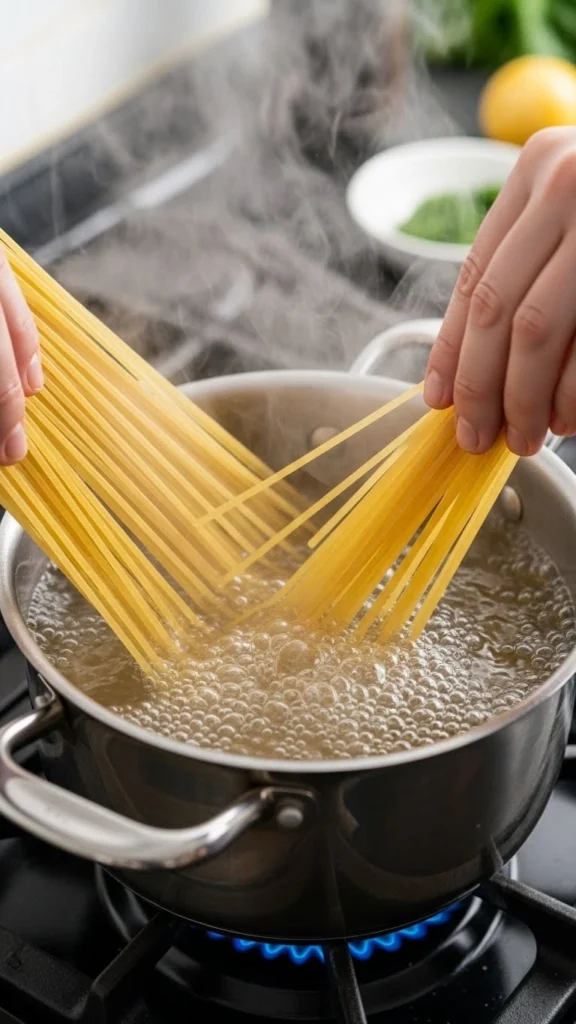
– Drop spaghetti into boiling water
– Let it soften for 10–15 seconds
– Gently push it down with a spoon
Stir immediately and again after 30 seconds.
This simple stirring step:
– Prevents clumping
– Ensures even cooking
Step 4: Timing Is Important (But Tasting Is Better)
Check the pasta package for cooking time — usually 8–12 minutes
For al dente:
– Start checking 2 minutes before package time
– Bite into a strand
Perfect al dente looks like:
– Fully cooked outside
– Tiny firm center inside
– No raw white core
⏱️ Golden rule:
Taste > Timer
Step 5: Drain at the Perfect Moment
Once your pasta hits al dente:
– Turn off heat immediately
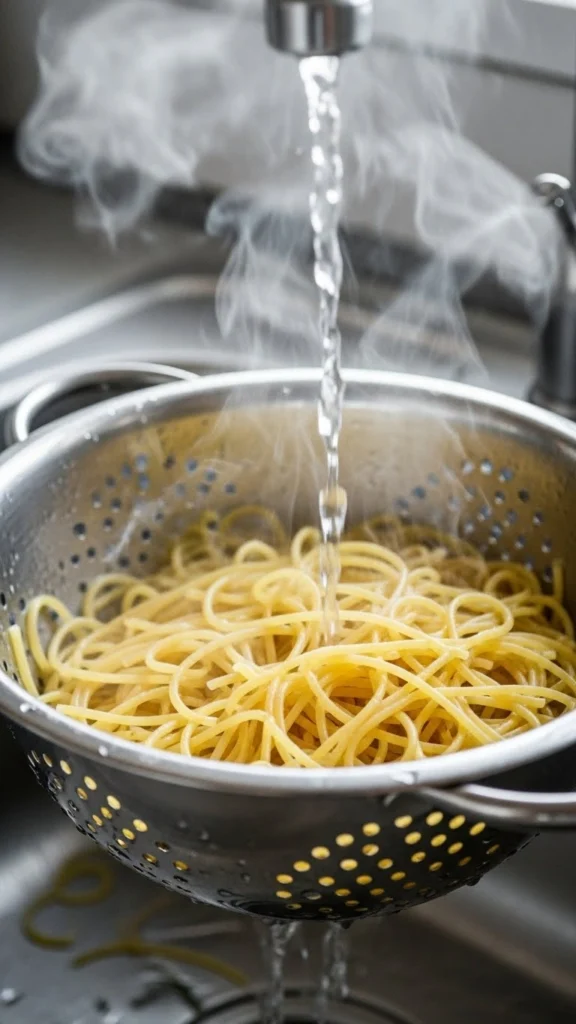
– Drain quickly in a colander
❌ Do not rinse the pasta
Rinsing removes starch — and starch helps sauce stick beautifully.
💡 Pro Tip:
Save ½ cup pasta water before draining. This starchy water is liquid gold for sauces.
Step 6: Finish Cooking in the Sauce (Chef Secret)
This is what restaurants do — and now you will too.
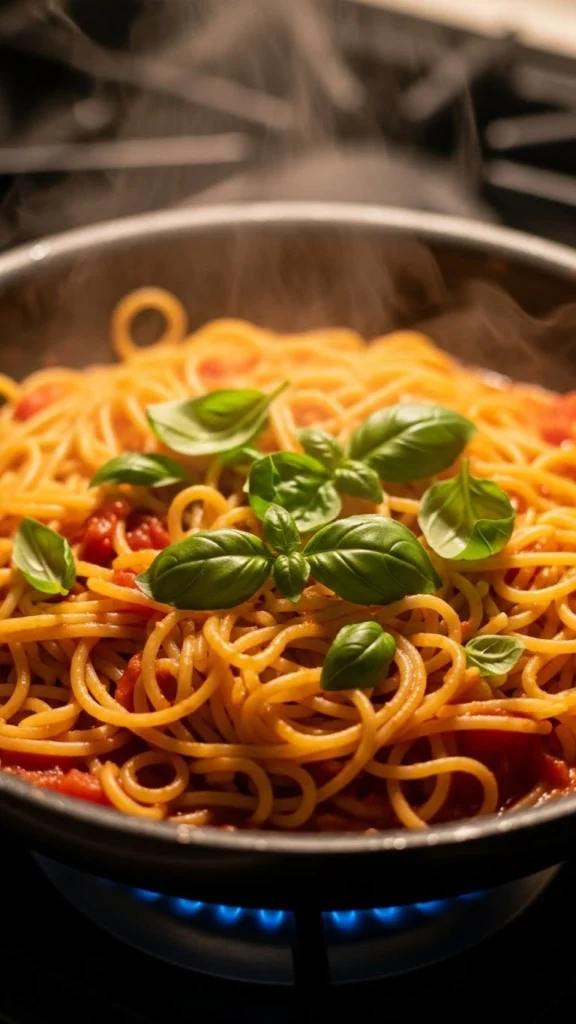
– Add drained spaghetti directly into warm sauce
– Toss for 1–2 minutes
– Add a splash of pasta water if needed
Why this works:
– Pasta absorbs flavor
– Sauce clings better
– Texture stays al dente
Common Mistakes to Avoid
Avoid these and you’re already ahead:
– ❌ Adding oil to water
– ❌ Overcooking “just to be safe”
– ❌ Using a small pot
– ❌ Skipping salt
– ❌ Rinsing pasta after cooking
Each of these quietly ruins texture.
Final Thoughts: Al Dente Is a Skill You Can Master
Cooking spaghetti perfectly al dente isn’t hard — it’s about attention and timing , not talent.
Once you get used to:
– Salty water
– Early tasting
– Finishing in sauce
You’ll notice the difference instantly.
Your pasta will taste better, feel better, and look more professional.
🍝 Ready to Level Up Your Pasta Game?
Save this guide for later, pin it to your cooking board, and try it tonight.
Once you master al dente, every pasta dish gets an upgrade!
Leave a Reply